My Blog
-
●● Mr. Valencia
●● Mr. Valencia and Friends (blue moon)
-
● Home
● Open Studio and Trip Home
-
◯ Return from Elfland
◯ Return from Elfland
-
● the furthest point
● a short thought on pottery
-
◯ a completed cycle
◯ a completed cycle and the difficulties of return
-
◐ Feb - Photos
A pottery, seen through photos, cautiously
-
● Feb - Gould
with Glen Gould
-
◑ Jan - Barefoot
Solitude, walking barefoot, the simulacra, fake stone age tribes, Disney
-
Early Jan - Ireland
Trip to Ireland, conversation
-
Dec 21 - 28 Studio
Things in the studio and how they got there. Thoughts on the soft opening.
-
Dec 14 - 21 sincerity
the project of sincerity, whatever that means...
-
Dec 2 - 7 Whales
Whales in the studio
-
Nov 24 - Dec 1 Thanks
Relationships, Community, and their Shadows
-
Nov 17 - 23 fragments
fragments from a fragmented week
-
Nov 10 - 16 Beginning
Beginning
Mr. Valencia and Friends
Early June (post-blue moon)
●●
I was just visiting Ivy in Ireland and, like last time, there was a memorable interaction on the plane that I’d like to share. The story starts on the way over the Atlantic from Atlanta to Amsterdam. I was sat by the isle with an empty seat to the right between myself and the man by the window. He was well dressed, middle aged, Southern European looking. I don’t remember how we started talking. I said something, but it was invited by like, a nod or some other bit of body language. We said a few words and after a short silence he asked me if I had a connecting flight. I sad yes, I was headed on to Dublin but much later in the day. He explained that he had a very tight connection on to Barcelona from which he would have to hurry to catch the last train to his home, Valencia. He wondered if I might be willing to switch seats with him. Now? Before we’d even gotten off the ground in Atlanta? Yes. So we switched seats and the sense of helping and being helped was such that we needed to do at least a little bit more of the getting to know each other’s stories thing.
Mr. Valencia was returning home after visiting his daughters, who lived in Asheville, North Carolina. In university there? No, they are ten year old twins. Ah, I see. (I didn’t feel close enough to ask more about the parenting situation and no further details were offered.) I’m a potter and Asheville’s a real capital for ceramics in the US. Making pottery, that is beautiful, how is it for you? Oh, and you’ve lived so internationally, what is it like for you living back in the States? It is such a beautiful country — the blue ridge mountains (closes eyes for a moment in appreciation) — but yes, your politicians are destroying the world, no? (Meanwhile two Floridian retirees in the row behind discuss what a wonderful part of the country they live in: so much safer and more sane than the rest of it).
It goes on like this with at least the required amount of enthusiasm and maybe a bit of conspiratorial intimacy in our Euro-coded doom and gloom in the shadow of the sunny retirees for an appropriate amount of time, but not so long, like with the man on the last flight I wrote about, that it would become impossible to break the conversation and establish our own little bubbles of close-quarters privacy for the next eight hours. The vibe I got from Mr. Valencia was that of a put-together, perhaps a bit world-weary and haunted by some complex romantic/paternal life dynamics, businessman, who had done this countless times and new his routine so well that he’d just rather go ahead and change seats so no one had to think about it later. I buckled my seatbelt, he buckled his, and we settled in to blankly not watch the safety demonstration animated in blue and white Delft tiles on our individual TV screens.
Nothing happened really interaction-wise for the first hour of the flight. It was already 11 pm at take off. I was tired and felt a general fatigue from the rest of the passengers, even the chatty Floridians. Contrary to this trend was Mr. Valencia. What exactly he was doing that was not-tired is too subtle for me to pin down. He did look over at me quite a few times, but beyond that, there was just an edginess to him that made me rethink my world-weary graceful European diagnosis. The idea came to me that, maybe, he had been possessed at the moment of takeoff by, say, a fiver year old, or an alien that had never flown before, and whatever it was really didn’t want to be caught possessing the body of a world-weary, romantically/paternally complex middle aged Southern European man, but was, none the less, struggling to figure out the cues to follow as far as normal behavior went.
Then the midnight dinner came around. As the stewards were in the middle of serving the row in front of me and Mr. Valencia, I paused the movie I was watching and took out my earbuds. With a glance over at me and a few seconds lag, Mr. Valencia took his earbuds out and paused his movie and looped his earbuds around the tray-table in the same awkward, totally non-standard, precarious way that I’d just finished looping mine. The steward asked me first what I wanted for dinner. I got the meatballs and a beer. Then the asks Mr. Valencia, who also ends up with the meatballs and a Heineken. To be fair, this is probably the most basic order for the general demographic he and I share. I kept my movie paused and tried talking a bit more with him. I said cheers with not-the-best timing, because he’d just poured his beer but it’d gone really bubbly and he just had a cup of foam which I worried might somehow feel a bit emasculating. We got through that a bit nervously and after a pause I asked him if he gets to go visit his daughters often. Quite often. A bit more silence. Do you get to visit your girlfriend in Ireland much? This’ll be the second time since she moved about nine months ago. I remember thinking that it was interesting how we’d both half-answered the question from opposite ends of a complete answer. But the conversation died there. Mr. Valencia put his surprisingly decent KLM earbuds back in and watched his movie while he ate. I decided I’d just eat before going back to my movie. Sometimes when I feel Im being observed, I fall into this like, monkish austerity where I sit straighter, look contemplatively into the middle distance, think deep thoughts (performatively? but who’s going to hear them), and in this case, arranged the various used plastic food containers and their laminate covers into orderly, compact piles as I finished their contents. Sure enough, when I looked to my left, Mr. Valencia had the exact same organizational system of used plastic dishes going on on his tray.
They collected our twin trays, my movie ended, the lights were dimmed, I put my head down on the tray table and went to sleep for most of the rest of the flight. In the “morning” we were offered tea or coffee to go with the cheese pastry that was the standard breakfast. I felt a little taken aback when Mr. Valencia ordered coffee with sugar and milk after I ordered tea with just milk. Had the possession ended somewhere over the Atlantic? Had I over-analyzed the situation? Then the plane landed and I wondered what version of “good luck with the rest of your trip” would best fit the tone of our preceding interactions. But almost in unison with the little ding that means you can take your seat belt off and start moving around the cabin freely, Mr. Valencia jumped out of his seat. He made it the first four or five steps down the isle at a near-sprint and then slowed to a more or less walking pace as other passengers started getting up and became obstacles around which he had to maneuver.
What to make of the odd behavior of Mr. Valencia? Or should I be questioning myself for reading too deeply into his behavior? As I wrote this, a backstory for Mr. Valencia came to mind. I don’t know that it’s the most plausible, but it’s more plausible than possession. My idea is that Mr. Valencia is just terrified of flying. He could keep it together until takeoff but then things got to be a bit much and he was able to keep it together only through some low level mimicry. He puts himself through this regularly to go see his children from whom he is separated by vaguely tragic, certainly unhappy, but otherwise unknown circumstances.
I didn’t really think about Mr. Valencia much until about a week later when I was telling the story to Ivy and her former housemate, Grace. A couple days earlier (that is, between the flight and the retelling), the three of us had gone to an evening of storytelling in a pub in Galway. A tiny, old, energetic Scottish man alternately sat or stood on a stage with just a cup of tea between himself and a severely overpacked pub. I’m going to try to retell part of one of those stories now:
——
The story of the Old Fisherman and his Young Son:
Before there were humans in Scotland, there were gruagachs. There were all very tall and they had long long blond hair. They were also a very stern, austere, and a bit judgey people. The Scottish came in and they tended to be a rowdy, boisterous bunch. There wasn’t too much in the way of all out violence between the humans and the gruagachs though. The gruagachs became harder to find but they kept on about their austere, hardworking ways and, in some cases, developed some resentment towards their new neighbors.
...
There was in Scotland an old fisherman who had a young son who wasn’t good for much. One day, the old fisherman decided it was time to teach his young son how to fish. They went down to the shore and the old fisherman started explaining how to set up the fishing rod, how to tie on a hook, how to bait the line. But the young son wasn’t paying attention all. He was trying — pitifully — to skip rocks into the surf, moving farther and farther from his old father, who was speaking calmly, but who was really terrified inside, knowing that his young son would be helpless out on his own, and that he and his old wife were quite old and if they could’t find a way to teacher their young son to survive on his own soon, they may die and leave him unprepared to face the world on his own.
So the old man was going on about the fishing line, quietly losing hope, and the young boy was wandering farther off as he tried to find a better angle for his incompetent stone skipping. And then the young boy shouted to his old dad:
“Look, a boat!”
And sure enough, there was a small boat moving towards them with a tall, long haired man at its helm. The old fisherman and his young son walked up to the boat. The old fisherman said hello and asked if they could be of any help.
The tall, long haired man in the boat said: “It is I who can help you. Give me your young son for a year and I will turn him into a great fisherman.”
The old fisherman was a bit taken aback by this, but his young son loved the boat, loved the tall man’s long hair and he knew that if he couldn’t do something to get his son to fend for himself, it might well be too late. So he asked his young son if he wanted to go with the tall, long haired stranger and the son, who has already started climbing into the boat —awkwardly, falling into the surf and getting his boots soaked — half turned and said:
“Yeeees daaaah, of course I want to go.”
And so the old man said: “Very well, take him for a year and please teach him to be a good fisherman.”
And the tall, long haired man, boat already out beyond the surf, laughed and said, “you will never see your son again! You did not make me give my word. I am a gruagach and I will make your son work for me and my family for the rest of his life!”
The old man rushed into the surf but the waves kept slamming him back onto the shore. He howled after the boat and tore at his beard in anguish. He sat for a moment on the beach, stunned and hollowed out by worry for his young son. Once his clothes had dried out a bit, he got up and started walking to the next village down the coast in the direction that the gruagach’s boat had sailed. He asked in that town if anyone knew if a gruagach lived in the area. No-one knew about the gruagach or any tall, long haired men, so the old man kept moving. He went from town to town looking for the gruagach and his young son for a whole year and finally he was told about a house in the forest nearby where a gruagach lived with his sons.
He went to this house and knocked on the door. Sure enough, the same tall, long haired gruagach opened the door.
“I’m here for my son!” Said the old fisherman.
The gruagach laughed mischievously. “Alright old man, I will give you a chance to have your son back. I have five dogs here. One of them is your son. If you choose the right one, he will transform back in to a human boy and you two can leave freely. If you choose the wrong one, your son will die!”
The old man paused for a moment and looked at the five dogs in small kennels behind the gruagach.
“Do you give me your word that if I choose the right one you will do as you said and he will transform back into a human boy and we can go freely?”
The gruagach was sure that there was no way the old man could tell which one was his son and so he laughed and said: “yes, you are growing wise with age old man, I give you my word.”
As soon as the old man heard this, he pointed at one of the dogs who had a round scar on his left forepaw, just as his young son had on his left hand. Immediately, the dog transformed into the old man’s son. The gruagach went red with anger, but he’d given his word and so he let the old man unlatch the kennel and take his young son safely home.
——
That’s really only part one of the story. Part two shows that the young boy hasn’t yet learned wisdom as he ends up getting caught again by the gruagach during a dog-racing scam he’s roped his father into involving his hard-won shapeshifting powers. And part three shows the young boy fending for himself as he escapes and wins the love of a local princess. But I was really reminded of part one when I was retelling the story of Mr. Valencia to Ivy and Grace. I think it was because of the story of the old fisherman and his young son that I was able to read into the oddity of Mr. Valencia’s actions the enduring pain and terror of parenting.
I have no way of knowing if Mr. Valencia really was terrified of flying, but he did feel like a modern day relative of the old fisherman, forced to travel long distances for the sake of parental obligation and love.
...
I got off the airplane in Amsterdam at a more leisurely pace than Mr. Valencia and checked if I’d be able to get on an earlier flight to Dublin. I had over five hours in Amsterdam and there was an earlier EasyJet flight leaving shortly, but the attendants at the gate told me that they were unable to transfer my ticket and that I’d just have to wait for my plane. The advantage of this was that I had time to go into town quickly to see an exhibition that I’d been following online by one of my favorite artists, Jesse Darling. The show was called “Godsworth” and it was an installation throughout the Oude Kerk, a church turned covered market turned museum turned sometimes art venue in the Red Light District, just a ten minute walk from the main train station. Jesse Darling recently shared that in his late teens and early twenties, he had lived in Amsterdam and been a sex worker in a building just down the street from this church, but the artwork doesn’t take that as any sort of central theme. The show filled the church with the materials of a construction site — piles of soil and debris, scaffolding, tarps. Often these materials made friends with the materials and visual language of the church. Shop towels connected to priests’ stoles; little angel figures emerged from truck horns and safety vests; road work lights framed tombstones and give off colored light like stained glass; piles of construction site soil covered large portions of the church sometimes covering sometimes adding layers of contrast to those tombstones; an immense blue tarp ascended and descended on a pulley and scaffolding the whole height of the transept like an immense Mother Mary. The show felt quite spiritual if not exactly formally religious — more like earthly powers taking shape through the stories that have helped shape Europe for well over a thousand years, but not governed or controlled by, say, Peter, the Pope, or the Bible. I left my bags with the attendant at the church’s side entrance and wandered around the exhibition for about thirty minutes. I watched another attendant lower Mary and then later watched as several attendants discussed some issue with how her tarp was twisting as she lowered down. There were several altars that had been amended with beer bottles, soda cans and random jars filled with wildflowers, like how people might decorate an impromptu memorial or an outdoor shrine. There were freestanding vertical bars of scaffolding into the tops of which thin leafless saplings had been mounted. They looked like very lanky and maybe a bit strung out adolescent urban ents.
It’s a bit hard to articulate the connection between this exhibition, Mr. Valencia and the story of the old fisherman and his young son. The paternal element wasn’t really present, at least not in a way where it was separated from the child or the mother. The sense of fear and love which kept the fisherman moving through a year of his old age wasn’t causing any turbulence in the exhibition either. Maybe it was still there, but in an inevitable ancient way. The timescale was too big (somewhere between geological and historical time), the subject too broad (Europe as a community, a land, a place of Christian and pagan spiritual practices) to be shaken by individual crisis (though it certainly contained all the crises of living compacted into something less personal but more enduring). But there was an element of movement onward, not through the specific biological process of transferring genes to offspring, just the ongoing, always unfinished, always shared work of living and believing in a present which is uncertain for ourselves and for the others, human and otherwise, about whom we care.
——
And now I feel I need to finish this with one final scene from that day before getting to Dublin, Ivy surprising me at the airport (a four hour bus ride from her home!), and running into the inevitable drunk American at a bar in Galway who is exploring the West of Ireland and wants to tell you his life story. After waiting maybe a bit longer than I should have to try (and fail) to catch the tarp virgin’s ascent, I rushed back to the airport and got in line for my EasyJet flight to Dublin. For these flights, there’s no jetway from the terminal to the airplane. Everyone had their tickets checked as they passed into a holding room at ground level from which we’d be guided out onto the tarmac and then ascend via movable staircase into the plane from either the front or back dependent on which side of fifteen our seat number fell.
While we were all still being held in the pre-embarkation room, two very tall young police officers came in and directed an older Irish man to the check-in desk, which happened to be right next to where I was squatting. The older Irish guy wore green corduroy pants which had a big gash in one of the back pockets, a blue button up, a thin leather jacket and a flat cap. I imagined him working in a steel mill. He was really barrel shaped and his hands were immense. He was maybe in his late fifties, like the sort of age and look where he would spend significant amounts of energy lifting heavy objects to prove to the younger guys that he was still fit for the job, but probably no longer at the stage of actually competing with them over who could carry the heaviest object. (These competitions are happening in my imagined steel mill, the inner workings of which probably have nothing to do with how steel mills work).
He was big but still maybe half a foot shorter than the supernaturally tall young Dutch police officers who were explaining to him that they had found the drugs which were hidden in an espresso tin in his checked bag. Now, I called this guy old, but I mean like, old for someone who looks like he’s still trying to show off how he can lift heavy objects and who is making his way back, clothes only partly intact, from what seems to have been a festively involved solo trip to Amsterdam. That is, he’s old enough that in a situation like this, where he is vulnerable and at the mercy of the powers that be, his vulnerability tips him towards old man, not young boy. And he was very clearly feeling quite vulnerable. Given his rode-hard appearance I thought maybe he’d try getting mad or put on some sort of aloof air, but no, he seemed to shrink in dread before the young police officers, quietly taking off his flat cap, running his fingers through his slicked back grey hair and periodically dabbing his forehead with a crumpled tissue while the officers turned aside to deliberate amongst themselves in Dutch about what to do with him. He spoke quietly and didn’t try to pretend it was a mistake or that he didn’t know it was illegal to smuggle small quantities of drugs in espresso tins out of Amsterdam. He kept apologizing and puffing out his cheeks. Within a couple minutes, the tissue paper was very wet. The young police officers were bureaucratically and neutrally stern. They could have been asking about his dental history or helping him to fill out an immigration form. That emotional distance, when the old man was so clearly worked up by the situation may have been the kindest option available to them, but it really underlined their power as representatives of the state. As the plane started to board, the old man was getting more anxious. He was clearly still hoping to somehow make it onto the flight. As I went out on the tarmac, the old man was frantically trying to fill out a form on a cellphone significantly too small for his giant hands. The police had called the deputy prosecutor who had decided that our old man would just have to pay a fine for attempted export of a small quantity of some drug (I assumed it was mamajuana but never actually heard). I don’t think he completed the process in time to board.
I know this was probably a very stressful, not good, mildly derailing sort of experience for this older Irish guy to have (and after a weekend that had already cost him at least a pair of good corduroy), but there was something very poignant and endearing about seeing him there sweating and attacking his phone with his huge thumbs while the immense young Dutch men calmly explained the penalty for very low level attempted drug smuggling. Maybe there was a little bit of the comic switching of roles between the generations, but really there was just another totally different way of mixing the same emotions, responsibilities and connections that I felt in Mr. Valencia and his daughters or the old fisherman and his son, or the church and JD’s Godsworth. I think, probably Mr. “I can still lift very heavy objects” had to stay in Amsterdam another night. We were already on the last plane to Dublin.
In the story of the old fisherman, his young son gets to keep his shapeshifting powers after his father rescues him. They get him into a good deal more mischief, but they’re also how he grows wise enough to eventually make his own way in the world. The old Irish man had definitely been around the block a few more times than the fisherman’s son, and though I don’t think he had shapeshifting powers, I’m sure he had a few tricks to make it through the night.
Open studio and trip home
Early April
●
I’m sat on the balcony in the late afternoon of a Wednesday. The full moon will be tonight. Tomorrow, I’ll go to the pottery and reset the studio for another cycle of making. Over the weekend, I had an open studio where I sold some work and opened my space to the neighborhood. This was a pretty small event, but it felt quite large to me. The studio has been a more or less private space until now. In December I had an open studio that was mainly hosted in “The Shed,” another building in the cluster of renovated old rail buildings to which my studio belongs.
The studio hadn’t yet taken shape clearly back then. Since December, I’ve made enough work to fire my kiln three times and in the process, I’ve reshaped the 200 square feet of my working space into something quite personal. On an average week, I spend about forty hours in that space alone.
I’ve never been someone who uses their bedroom as a private space very much. I like working in a shared kitchen or living room. There’s never been a space that I’ve personalized so fully, or felt such responsibility for. So opening up the studio, there’s a type of vulnerability and intimacy that gave the event a real intensity.
Again, it was quite small. My studio is kind of hard to find. It’s down a driveway behind an unoccupied office building that looks like a house. In my focus on the pots and the space itself, I didn’t focus very much on signs or finding good ways to direct people to the studio.
I did write a little zine about my background and my experience setting up the studio. I printed out about sixty copies of this zine in my bedroom at home and delivered them to houses around Inman Park.
One of the next tasks I’ll focus on will be to set up a little box along the street in front of the studio where I can put copies of the zines I make and hang a sign regularly when I want to open the studio to the public.
I’m going to have a new neighbor soon in the house/office by my studio. She asked me during the open studio what my ultimate goal is for the pottery. My answer wasn’t very good, but it mentioned wanting to be able to host events and invite people into the space as well as to send pots out to stores and not have to worry about hosting events or sales myself. Within that answer there’s a mix of wanting a great deal of privacy and control over a quiet, secluded way of working, and a real desire to be an active part of the life of the neighborhood I’m working in. I think both are possible but I’m not quite sure how yet. That balance between exposure/community and solitude/introspection exists on many levels.
In preparation for the open studio, I fired my kiln midway through last week. On returning to the studio to see how things had went, I saw that the lid of the kiln is cracked down the center. I don’t know if this means I need an entirely new lid or if I can just get a new band to hold everything in place. I told myself that was something to wait to figure out until the open studio is finished.
Pacing myself in the work of the pottery has felt like a major theme of the last few weeks. I reach a point most days when I recognize that if I do any more, I will just cause problems. Often I don’t listen to this warning until after something has been broken or forgotten.
One day I was photographing work at the end of the day and in a hurry to get things done, I knocked over a vase I’d made. Friday, while arranging pieces for the open studio I dropped a mug. A week ago I threw a set of bowls and they all ended up cracking because of the heat of the kiln being fired that night, even though they were well wrapped in plastic. These types of issues almost always happen near the end of the day when I’ve insisted on doing some final task before being done for the day. I’m responsible for all of the tasks that have shaped the objects that end up getting destroyed, so when I make a mistake like that, I immediately thing: that was forty minutes or an hour and a half of work just destroyed in an instant. I know that’s a bit of an overly simple calculation — there’s a lot of learning that goes into making that has meaning beyond the final piece — but more than anything, it has helped emphasize the lesson that sometimes doing less does more. Going back to my interest in Le Guin’s sci-fi, this is the main lesson that people learn in her books: do only what is absolutely necessary to do.
—
Over the past few days, I’ve been in Tuscaloosa. I went back with my friend Funmi, who needed a ride from the airport and it was a good excuse to mark the completion of the open studio with some reflective time away from the temptation to work in the studio.
Back in Tuscaloosa, I stayed with my parents. We went to a new Mexican restaurant and sat in a back patio area that I expect had been a parking lot recently until some tables were scattered around it. Before it’s time as a parking lot though we were remembering that it used to be the courtyard of a nice restaurant with a giant tree growing in the center of it. That would have probably been close to fifteen years ago now.
I initially had a bit of a dysphoric time going around Tuscaloosa. While I’ve lived there most of my life, my time there was punctuated with a year in the UK in high school, a year in France in college, and then grad school back in the UK. Those periods spent away always felt like they brought out the distinctive, personally meaningful vitality of this odd Southern college town.
But recently, with my brother no-longer living there and most of our friends gone elsewhere, it’s lost some of that sense of deep personal meaning. The other day Ben and I watched Steel Magnolias and Ben remarked how strange it was that we grew up in a place similar to where the movie’s set. I’ve thought the same thing. We have an intimate knowledge of a culture that we feel almost entirely outside of.
I was planning on leaving after one night in Tuscaloosa. But then, as I was getting on the highway, the tire of my car blew out. It would be the next day before another tire was ready for the car, so I headed back to Myrtlewood.
Back at home I had dinner with mom and dad and we talked about the child development center, a program at the university far less dystopian than its name would suggest where I went to preschool and which mom was reviewing these last few days as part of a university committee. We talked about memories of the child development center, of Tuscaloosa, the house, the ways that a family changes from being the nest created by always-exhausted young academics for barely conscious Canadian/Tuscaloosan babies to the place those kids can visit and return to as semi-autonomous adults.
At one point, mom said to dad “we’re getting kind of old” and in that offhanded remark, it felt like a frame around this period in Tuscaloosa came into view, a frame delineating the period of their life as professors and Ben’s and my entire lives until now. Not a total view, the boundaries are still flexible and incomplete, but there is something solid and almost whole feeling to reflect back on.
My friend Will sent me a news article that said that the brewery I worked at last year would be closing in early May. After dinner I walked downtown to see what the story was. Outside the brewery I met the brewer and owner, who was sat with a regular who I’d helped pass a basic art test so she could become an art teacher in the county schools. I explained to them that I had started my pottery in Atlanta. The woman found me on instagram and spent the next few minutes going through every one of my posts, reading them and liking the images.
Meanwhile the brewer explained that sales just weren’t that great. Since covid people don’t drink much anymore and on top of that everyone’s taking ozempic and that takes away their craving to drink. And he’d been trying to get his beer into Publix for two years and they still wouldn’t stock it for some reason. He told me he was happy for me and how wonderful it is to get to do what you love everyday and be your own boss. His eyes were bleary and while some of that had to do with the amount of beer he’d drunk, I think a lot was the emotion of losing the brewery.
Inside I talked to one of my old co-workers. Initially she didn’t recognize me but then she explained her whole life since I left. The story involved shooting ranges, tanks, the flight school where she was learning to be a pilot getting sold, wanting to move to Washington to be with her two partners, trying to get consistent hormonal treatment as a transgender woman while moving across the country, a cute cat, the interview process for becoming an ambulance dispatcher.
Then I talked with a regular who had just confessed to his crush when I left in May. Apparently they had a couple good moments and then she moved to another state. The wounds will take time to heal and in the meantime, the open-mic comedy he’s been involved in at the brewery is about to have no home.
Another regular interrupted to say hi while also purchasing two tee-shirts and a hoodie. He pointed to a red shirt with the brewery logo and Tuscaloosa’s old railway bridge on the back and said he thinks that’s the only one he still needs to complete his collection. With all the different colors and types of merch, that means he must have at least twenty different brewery-branded clothing items.
There’s a regulars group of older southern men that were in the back. I think some of them have an ownership stake in the brewery. I was never very chatty with this group, but they always tipped well. One of them always used to come up to the bar and just say the name of the beer he wanted. I felt we’d reached a new level of intimacy one day when he just put his mug on the counter expecting I knew what his usual was.
One guy who I’m absolutely positive was there every day I worked at the brewery was stood with this group. Usually, he’d sit alone at the bar but chat with everyone as they came and went around him. One day in the spring, his father died and as he left, almost everyone in the bar said goodbye. He hadn’t told too many people about his dad, but it traveled around the room quickly.
I walked back through one of the grand neighborhoods and along the old rail track raised above kudzu filled ditches on both sides.
I walked along the strip and ended up just in front of a college student explaining to someone who seemed to be on the edge of being his girlfriend how he needed to get home before midnight to submit the paper he had due. He was worried though because he’d been drinking a lot at his friend’s birthday party. He then explained that actually the paper was done, he’d finished it that morning but just needed to submit it. Nothing was quite adding up and I couldn’t tell if it was that he was being evasive to this woman, or that he was too drunk to be fully coherent, or that he was just really disorganized, or if I was just trying to apply my now too old and practical standard of sensibility to the behavior of an eighteen year old college student.
I spent this morning reading while waiting for the tire to come in for the car. I sat on the front porch and across the street a work crew was putting a new roof on the house across the street. I’m pretty sure that the first shot I ever took, certainly the first fireball whiskey, came from a college party in that house spilling out into the street, high school me going out to see what was happening. Now the house is the second home for a doctor from Birmingham who comes down to Tuscaloosa for the football games. He’s putting a whole second floor on the house, possibly for his grandchildren to use it when they’re in college, possibly to sell it to someone else in need of a game day house.
The weather was pretty sunny but at a certain point, it suddenly started pouring. The workers on the roof started swearing and trying to get a tarp over the roof frame. At first they sounded really pissed off but then the rain and wind were so intense and ridiculous that they seemed to just be laughing about it and telling the clouds to fuck the fuck off.
Then the sun came out and as I was getting in the car I saw this guy on the roof: shirtless, fishing sunglasses, soaked jeans, and cowboy boots, leg propped up on the outer frame, blue sky shining out behind tattered clouds. It was comedically heroic and comedically southern. And it was also just a guy going about his work in Tuscaloosa.
I don’t know how to read the town right now or how to read myself in it. But there’s a lot of beauty and possibility in that uncertainty. People seem a bit archetypal, time doesn’t quite feel like it flows the same.
But then I drove back into Georgia, reset my clock (Eastern time), and it’s back to trying to figure out my own present, which is it’s own little pocket of isolated time tucked away in a pottery and looking up at the moon all the time. But it’s starting to open up a bit.
------
the March new moon
return from elfland
It is again the new moon. Over the past twenty nine or so days, the moon has circled the spinning earth. About two weeks ago, it was at its furthest point from the sun. During that night, the shadow of the earth covered the moon and there was a lunar eclipse. In Atlanta, this happened around 6 am. I tried to see the eclipse, but Atlanta was covered in thick, low clouds. I did, however, get to hear the screaming of the dawn chorus of birds already frantic with the coming of spring.
This has been the month of things waking up from winter. First the daffodils, the plum blossoms the jessamine, the pears, the camellias, and then the azaleas, now the dogwoods. There’s a portion of my walk to the studio that goes by a huge radio or TV tower with a tiny brick building on one side and a hill leading up to an elevated highway on the other. The path that cuts between antenna and highway is lined by crepe myrtles on one side and a steep, north facing hill of scrawny trees on the other. The temperature always feels much lower walking through there. I can’t remember the look of the trees leafed out in autumn, so fully suited do they seem to winter. And yet even on that shady north facing hill there is a dogwood blooming now and the neon green bubbling of spring growth. The crepe myrtles still seem stuck in winter but maybe they’re just conserving energy, afraid that some maniac arborist is going to come cut off half their limbs (not unlikely).
So spring is coming, the earth is continuing its turning around the sun as the moon has completed one of its quicker turns around the earth. Today, the moon is between the earth and the sun. If the sky is very clear, a dark dish might be visible, but there will be no moonlight.
Between the darkness of the last new moon and tonight, half the time was spent waxing, the moon getting rounder each night as it moved counterclockwise around the earth to its furthest point from the sun. Then, it began waining, shrinking from full, to gibbous, to half, to crescent, and now back to darkness. The moon does not see its face changing every night as we do. Except for the excitement of the eclipse which really did throw an unusual shadow , the sun was always shining on it the same and it was the earth that was changing shape. But to me it was a complete cycle, a cycle within a longer cycle of which it was just part, maybe called “early spring.” Still, a complete cycle.
During this cycle, I tried to shape some of my activity, particularly that relating to the pottery, around the changes of the moon. I wanted to focus on the rhythm of exploration outwards and return back ‘home.’ During the waxing of the moon, I focused on new projects, new shapes, glaze ideas, finding places to sell my work. I was also listening to new books while working in the studio. I went on a deep dive into Ursula Le Guin and started thinking more about fantasy literature. Just as Aomame steps unwittingly into 1Q84, I think, at some point this month, I stepped into what Le Guin calls Elfland. Like Murakami’s 1Q84, Elfland looks more or less like the normal world but is reshaped slightly by the dreams, memories, and desires of certain people living in it. Elfland is reality experienced through the lens of fantasy, what Le Guin calls “the language of the night.”
The language of the night is the language of ethics. If the literary novel exercises our capacity for sympathy, relating to and understanding the complex inner workings of its characters, the fantasy novel primarily exercises our ethical capacity. Elfland, in whatever form, is an immense amplification of our own inner worlds and the conflicts that happen there grow out of the author’s sense of right and wrong. If you’re going to create a world and tell a story in it, there must be some shape to it, something will be wrong that must be put right or, tragically, go more wrong. This ethical character isn’t necessarily present in fiction set in our world because our world ins’t the author’s inner Elfland. Literary fiction almost certainly express the author’s ethical outlook, but it does so secondarily through the psychology of its characters.
I know that’s not all particularly fully thought out, but its been a big part of what I’ve been thinking about while making pots, mixing glazes, drinking tea, mopping the floors. And all that’s then led to thinking about the embodiment of ethics in other art forms. Like, how does non-figurative painting relate to this ethical/psychological divide? Or what about craft work? Craft as I’ve learned it, within the American-British pottery traditions, has a lot to do with fantasy. It traces back to the Arts and Crafts movement and through that to Ruskin and the Pre-Raphaelites. It also connects to the Mingei movement in Japan through Leach and Hamada. In all of this, there is an aesthetic turn away from the new technologies of industrialism not only for the sake of the beauty of the pieces, but also for the life values supposedly exhibited by the medieval (ish) craftsperson.
There’s a lot of borrowing in pottery from the same medieval imaginary that gives shape to many an Elfland. I think I’m down with this - the ethical orientation of pottery, but again it’s not a perspective I’ve fully recognized. There’s a lot of mixing of artifice and reconstruction with a rhetoric of the humble, simple, and honest craft object. It’s very weird at one level for one to spend a week making a hundred handmade mugs and going on about how one is guided solely by the criteria of functionality (as some potters will do). This tension between the ‘down to earth’ness of pottery on the one hand, and the total anachronism of a craft pottery in a modern city on the other pointed itself out to me in Elfland these past few weeks and I’ve been carrying it back along the return to see if I can work with it more on the next journey.
I said last time that I’d be trying to pay attention to the journey back. In truth, I don’t think I did particularly well. It is much clearer how to set out on a journey than it is how to return from one. You don’t need a map or a good sense of direction to start wandering, but you probably do to get home. I’ve realized that the moon is a good psychological guide but struggles some with the work of the day. It belongs to the relatively interior world of the night. But the pottery often feels more in line with the changing of the season: things are beginning to sprout and grow. The symmetrical growth and decay of the moon is not the most natural guide to the practical rhythms of a growing business. Still, I do think I’ve payed attention to the moon enough to and built up a connective narrative with it and feel the basic movement of my energy to change alongside it. The two weeks around the full moon were the most productive, the most high-energy. There was a slow start and this past week I’ve recognized that I’ve been less focused and slowing down. Having something external to bind these natural ebbs and flows of energy to has given them a sense of rhythm and predictability. We’ll see if I can find anything more definite to follow back on this next journey. Until then, I hope we can all enjoy a little quiet at this darkest time of the month.
the March full moon
a very short thought on pottery from the furthest point
air gives pottery form, water is the tool used to work it, earth is it's material, and fire it's magic.
I’ve taken in a lot of words these last few weeks, lots of fantasy reading. I feel very saturated with that world and a bit over saturated with words. So I’m leaving very few and seeing what settles with the return.
A return journey is still a journey. Retracing steps is not the same as going back in time. It is going back over ground already walked on, seeing the traces that one has left on the landscape.
I’m on the lookout for marks relating to the shape of mugs, particularly tall, skinny mugs with two distinct sections. I’m also on the lookout for marks relating to a basement or underground parking deck filled with water and swimming pool inflatable couches. The forward march of the seasons is in full, visible swing. Things are smelling different, blooming, waking up. All that change is part of a longer journey, a circle subdivided by the lunar rhythm roughly twelve times (thirteen this year). It is in contrast with the extroverted drama of the solar cycle that the moon feels so internal, psychological. The pottery is run during the day, but I am ordering it by the rhythms of the night.
Practically speaking, this cycle is when things get moving on selling the pots. Tomorrow I talk to the first shopkeeper who might stock my work. Later in the month (though, in the next lunar cycle) I’ll hopefully present work at my first market with another one already scheduled for April. Along with the plants, I’m waking up from winter.
waining crescent, new moon, waxing crescent, mid Feb, 2026
a completed cycle and the difficulties of return
Waining crescent, mid February, 2026
As we get back to the new moon, I’m reviewing my writing over the past month or so. The lunar cycle is how I’ve decided to find rhythm in life now that I’m no longer a student or a worker conforming to someone else’s schedule. A pottery is full of rhythmic activity and requires a close attention to timing and cycles. Like the weather, many of the basic ceramic processes have to do with the water cycle. I am constantly watching how clay is dries, rehydrating it recycle into new pots, or firing it into vitrified, non-porous ceramics. These processes lack any absolute consistency though. For example, this weekend is very wet. I am writing in my living room at mid-day with all the lamps on in what feels like dusk because of heavy cloud cover. Under these conditions it might take a pot three or four days to dry out enough to be trimmed, while, if it were really sunny, it might be too dry if I were to leave it uncovered for a single night. This sensitivity to humidity is one of the ways that pottery keeps me quite flexible to the changing weather conditions and requires a good deal of adaptability in daily routine. Zooming out slightly from the day to day though, I’ve felt the need for some broader consistent pattern by which to structure my making, my time, my sense of self. The lunar cycle has been what I’ve chosen to follow, and now, I am about to complete my first uninterrupted cycle of the moon spent working at Atlanta Studio Pottery.
Over the past month, I’ve laid the groundwork for what an uninterrupted month of making might look like. Each week, I make two to three forms which I try to complete during that week. Initially, I thought that this might look like throwing one day, trimming and handling the next, then repeating for the second form and in that way getting through four days with the fifth for whatever extra bits needed doing, some experimentation, and a big end of week clean up. In practice, it’s quite hard for me to do a single task the whole day and most days I throw one set of forms in the morning and then do whatever other studio tasks are at hand in the afternoon. In this way, I can watch the initial drying of the pots from the morning and get them to a point where they are firm enough to be more safely stored overnight while also breaking the day up into different activities. I still try to make this process take basically four or at most four and a half days so that on Friday I can spend some time experimenting with new shapes or techniques.
This arrangement of the week is one of the basic units I work with to articulate the rhythm of the lunar cycle. As I slowly develop the studio, more and more tasks will round out the studio schedule. Mixing glazes, loading the kiln, packing work, etc all have their own rhythms to add to the flow.
The importance of the lunar cycle then becomes giving a narrative shape to the collection of weekly tasks. I crave a sense of meaning and direction. The pottery tasks are deeply meaningful, but they need to be cradled inside some larger framework in order for that meaning to be legible. The most obvious framework for meaning that is socially provided is commercial success. I can’t discount this framework; it is a practical necessity, but not the structure on which I want to build my sense of reward, progress, satisfaction with the work that I’m doing.
Over this past month, I’ve experienced the lunar cycle as a movement of adventure outwards and then retreat. In very practical pottery terms, this has meant that the waxing side of the month was spent trying out new forms, experimenting with different ways of organizing the week, testing new ways of reclaiming my clay, making my lunch, walking to the studio etc. and the waining half was spent sticking to some of these routines and relying more on the comfort of repetition than the excitement of novelty.
The reward and sense of progress in that has come from the sense of setting out from a position of relative comfort towards a frontier of novelty and then being able to turn around and go back, bringing with me some of the adventures and new experiences while knowing that I am also returning to something comfortable and secure. Adventure and return is one of the most basic, narrative arcs that we use to shape stories and it pretty easily presented itself as a way of linking my activities to the lunar cycle.
Formally, this story maps onto the progress of the moon in relation to the sun as well. For the waxing half of the cycle the moon moves until it is furthest from the sun at the full moon. For the waining half of the cycle, it comes around the other side of the earth and returns to its closest point with the sun.
I’ve then also tried to understand my own emotional state through this cycle. Spending so much of every day alone and quietly working with only whatever sense of structure, reward, security, and direction I can give myself, there is a lot of space for the exaggeration of emotion, for getting inside my own head. Sometimes, that can be really lovely. In good moments, I can feel more deeply engaged in the task that I’m working on, or more absorbed in the music or book I’m listening to than I would otherwise. But in the more fragile moments, there’s very little support in the form of external indications of what a reasonable response is, or the leveling influence of everyday conversation to guide me back to a more stable frame of mind. In this relative absence of social and professional context to give shape to my psychological states, I’ve felt a great deal of vulnerability to pretty strong shifts in mood and general outlook on the world.
So this past month, I’ve tried to maintain a type of ongoing report with the moon which has given structure to these emotional fluctuations. The arc I went in hoping to ride through the month was, like the pottery cycle, a first half of increasing openness and stretching away from comfort and familiarity followed by a return from that frontier to a quiet, affirming and secure sense of rest. Emotional shifts are inevitable, interesting, not to be avoided. But without any sense of predictability or structure, they are unguided and the work and exhaustion that comes from a constantly shifting inner world is experienced without a stabilizing sense of purpose.
I recognize that within any four week span, I’ll likely have moments of extreme happiness, sadness, enthusiasm, aimlessness, and so on. I have often felt a tendency to try to analyze these emotional states, and, through this analysis, to rationalize my emotions into something explainable and thus controllable. Control, consideration for others, insight into myself, these are all good things, but I also think that my rational capacity to control my psychological state through self-analysis falls short of my actual emotional range. Ignoring this fact and turning away from that which can not be rationalized within myself is a type of violence against the fullness of the emotional range of being human. But trying to yoke that emotional range to a consistent cycle like that of the moon isn’t trying to silence it, it is just trying to give it structure which forms the foundation for a more trusting relationship.
I’m still working out the foundations of my relationship with the moon. Some people claim to be strongly affected by the full moon, or by other astronomical objects. I don’t feel that sensitivity as something inevitable. I’ve often enjoyed looking at the moon before, but without trying to develop this relationship along the lines I am trying to develop it, my mood would not be particularly affected by whether the moon is full or new. Now, each evening as I walk back from the pottery or whenever I’m outside, I try to find the moon. I see where it is in its journey and I think about the journey I am laying out for myself across the coming weeks. I try to intertwine our stories so that, as its traveling companion, I can rely on it a little bit for a sense of shared experience.
At the waxing crescent moon, later mid Feb
I’ve taken a while to work through this blog post. Perhaps it is the quiet of the new moon keeping me more concerned with the intimate things close at hand. Perhaps it’s my excitement at the first load of pots going through the kiln; shepherding that process along has been my priority in a way that I realize has taken away from the blog writing and the instagram posting.
I left the above fragment unpublished until now because it feels incomplete. All of what I’ve been thinking about has had to do with these arcs along which we tell stories about ourselves and the world. The lunar cycle is one of those arcs that I’m working on developing a relationship with, but I couldn’t manage to get the blog post to feel that it had completed its journey and come back to its own version of the new moon. I talked about the moon and I as traveling companions. Perhaps really I am asking it to be my guide and I got lost somewhere on the journey home. I have started to think that we are much better at setting out on journeys than coming home. So many of our cultural stories are about going away, growing up, starting new things. Coming home, putting down the walking stick, deciding that you’ve gone far enough for this journey, those parts of stories are just as important as the setting out and I am realizing that that is actually the part of the lunar cycle that I find most difficult to accommodate myself to.
In fact, I can’t get much of the last cycle to fit into something that feels like a completed narrative. The pots are now cool and it is time to assess and begin a new making cycle. There, that’s something, a round of making completed. But that’s about as far as the sense of completion goes.
The moon is not a biological being. Along any time scale that we can feel, the moon is absolutely constant in its rotation around the earth. This consistency lacks the faltering changeability of life. I’ve said I want to develop a relationship with the moon. I need to meet it halfway somehow. I start to see that I can’t really take the moon in isolation. The moon, as experienced on earth, is part of a broader ecological system, and in order to weave it into the meaning-making structure of my own life, I need to take into account the larger context in which I view it. Cycles like the lunar cycle, the year, night and day provide a stable scaffolding around which to grow. Those cycles have been there my whole life and they do form the basis of much of how I’ve structured my life. But they’ve also been hidden behind the cultural practices which themselves grew around those astrological structures to the point of obscuring them.
Just about any seasonal festival has its basis in an expression of gratitude for the consistency of the year. The foundation of any belief in divinity is at least partly in the fact that day follows night and night follows day and that the seasons will change in a more or less orderly way and that the days will grow longer and shorter in an exact pattern. This consistency is so different from the flexibility and changeability which form the basis of biological life. From within this changeability, it is deeply reassuring to exist within some sort of larger pattern which feels secure.
Between that absolute consistency and human changeability lie the structures of ordering and meaning making. The basic material of these structures is stories. Stories are flexible and changeable like people; they can adapt to new times, bring in new characters, but, from the moon and the stars and the sun they derive a predictability that weaves the lives of changeable humans into an orderly universe.
—
Okay, I think I need to step back from some of the grand philosophizing for now. In a way, I think metaphysical abstraction is a way of escaping from the worries of the stories I’m actually involved in right now. Thinking is such general and expansive terms is doing the story weaving work as close as possible to the absolute orderliness of the moon, the stars, and the sun. But there’s a lot going on in the more specific details here in Atlanta that need weaving into the structure.
Here, there is the desire to yoke the human rhythms of the pottery and my daily life to these celestial cycles. The completion of this first arc is marked by that first kiln load of pots. Among them are some really decent pieces. To celebrate this completion, I went back to Tuscaloosa for a few days and spent time with my parents. I also stopped posting for a week and embraced the privacy that came with that. Ben and I had friends over last weekend, we made dumplings to celebrate the lunar new year.
These activities were more or less haphazardly thrown at the new moon. They are all attempts to build on this foundation of the lunar cycle. Now, as the new cycle begins, I start to look for points of repetition, rhythms within the structure which give a sense of reassurance in consistency. At the beginning of the last lunar cycle, I tested several dozen different glazes and fired my kiln. Throughout the month, I experimented with a variety of different shapes and then produced a kiln’s worth of those forms, glazed in the chosen results of the experiments from the beginning of the month. This month, I need to focus on finding places to begin selling work. By the end of this lunar cycle, I’d like to have a relationship with at least one store where I can sell my pieces. I also want to explore clays that I dig straight from the Georgia soil. Georgia has lots of usable clay and I want to start testing my ability to work with this local material. I want to spend at least two weeks in a full production cycle, not experimenting with new forms but producing a set of cups, bowls, and mugs at my maximum capacity. I also want to write consistently, not just as a summary at the end of each week, but as a daily practice that allows for deeper and more structured reflection.
These goals are the contents of the bag that I take with me as I begin this new journey-lunar-cycle. Most likely, not everything will get used in the course of the journey and it may well be that there are other things which have either snuck their way into my bag or which I’ll pick up and put in it along the way. But from the inward looking darkness of the new moon, these goals present themselves as companions on this next lunar expedition. From new moon until the next full moon on March third, I’ll watch the moon get fuller in the sky as it stretches away from the sun to its fullest point. There will be a full lunar eclipse on that day and I’ll have to figure out what that means for my month-story. From now till then, I’ll experiment, explore, discover new things and ways of working. After that, I will start turning around. This will be the harder part of the month, I think. What does it mean to turn around and retreat? How do you make yourself stop when you know that there are more interesting and important things around the next bend? How do you keep your eyes lively and attentive for that which you haven’t yet seen when you know you are beating back along a path that you’ve already walked out on?
Until the next update along the way…
waning gibbous, early Feb, 2026
a pottery, seen through photographs, cautiously
Last monday was spent cleaning, organizing, and getting new supplies for the studio. My ware boards had been a bit of a problem, as they were all made from old wooden planks. As they were repeatedly washed down, they warped, meaning that they didn’t leave a flat surface. This meant that any pieces that were placed on the boards would also immediately warp. This isn’t a huge issue for some pieces, but for things with lids, when it’s important to have an exact fit, it becomes impossible. So, I got some concrete board from home depot which I then cut up into usable sections.
The rest of the week moved in a rhythm of mainly throwing one day and mainly trimming the next. For the first half of the week, I was working on cups and for the second, gaiwan and gongdaobei. Gaiwan are covered cups that are used to brew tea and gongdaobei are what tea is poured into. From the gongdaobei, the tea is then poured into individual teacups, ensuring that everyone gets an even pour.
This had the bones of a very peaceful week. The mix of activities was good, they all provide interesting challenges, but, to be honest, I do feel a little bit like I’m still running in circles here near the starting line of this whole pottery operation. Add this feeling to an incredibly depressing week of news (was it? Or maybe every week’s been like that and I’ve just happened to notice this week), and the little haven of the studio felt closer to an amplification chamber of angst.
The next steps that need to be accomplished to move the pottery forward are to fire a load of work and to begin looking for places and ways to sell the pots. Until there is an entire arc from clay through to payment for completed pots, the ecosystem of the pottery will feel artificial and fantastical. It doesn’t yet support itself, and so, while the work I do there each day does feel meaningful, it also feels somewhat hypothetical, like, maybe this will end up sustaining itself, maybe I can call myself a potter. But only maybe. It’s certainly not clear yet. I think that sense of working a hypothetical job is weighing on me. Practically speaking, I am doing everything I can to produce work, fire it, and begin selling, but until that process starts to turn into a self-supporting cycle, I’ll just have to work through this bit of self-doubt.
Another part of this is figuring out how best to share the work. I want my ways of sharing the studio experience to feel genuine and personal. There are a lot of models out there of people selling pottery through instagram. The ones that really work come from people who have made the recording of their process into a meaningful part of their work. I’m still finding that voice. For one, relying on instagram as the main outlet for sharing and potentially selling my work doesn’t feel great. I recognize that spending time on instagram is, for me, something that happens usually in moments of deep fatigue and mental strain. I am rarely actually happy when I’m on the app. I have seen a lot of great pottery because people post in on instagram and I’ve kept up with many friends through the app. But if it weren’t there, I’m also sure I would have found information about potters in other ways, kept up with friends through different means. It’s an important part of the current artistic ecosystem and even just for maintaining friendships, but I also feel pretty strongly that it does more harm than good. I don’t really know what to do about that yet, but along with the self-doubt, that’s another shadow that’s been on me this week.
This website is an attempt to deal with some of that. I feel much less emotionally wrung out exploring someone’s website than I do scrolling through instagram, and so writing this I feel less complicit in that emotional wringing out of others. But I’m also reaching very few people here and I still need to figure out if and how this website changes shape into something that is an active aid to the development of the business as well as being something that’s grounding and personally meaningful.
Photographic representation is a big part of this, too. Photography is how people most readily share their work online. Susan Sontag has been a big influence on me this past year. She has a series of essays collectively called On Photography which explore the development of photography and have been coming to mind throughout the week.
Here’s just one fragment from that that gives name to part of the issue I’m dealing with: “The destiny of photography has taken it far beyond the role to which it was originally thought to be limited: to give more accurate reports on reality (including works of art). Photography is the reality; the real object is often experienced as a letdown.” (From the essay Photographic Evangels).
As the person making the photographs and developing the studio, I don’t want to be doing the violence to my own studio of making it into the letdown behind the photographic reality. And I understand what she’s saying: photos let us see the world in ways that are not possible in the flow of everyday experience. Photos aestheticize reality, they turn a room to be worked in into an image to be looked at. They create one order of beauty, but through that, they obscure the way that the space is experienced in time and with a body. The same goes for pictures of the pots themselves.
Sontag’s thesis throughout On Photography is that ‘photographic vision’ has become the baseline for how we evaluate and experience the world. She looks at how photographs have changed our relationship to history, to world events, how we process daily experience and form memories, and the type of structure we look for in life. Photographic vision creates a dislocated and fragmented reality.
The way of experiencing the world that Sontag describes in this book is one way of describing the social conditions broadly called post-modernism. Sontag was writing in the early to mid 1970s when post-modernism was first being articulated. These days, much of that fragmentation is taken for granted as the normalized way we experience the world. And the tools of photography are now largely situated within digital environments which are adding a different type of mediation to our experience of the world. Sontag was concerned about the ethical position that photography created: the position of the confused, distanced, and passive observer, reality (or realities) becoming something frozen within a frame. How are we supposed to feel ethically invested in the world when it is experienced through such an uncrossable barrier?
That basic ethical problem hasn’t changed. But as technology allows for the increasing personalization of a digital experience that is so much of our lives, the experience of photo-reality shifts from the total incomprehensible sprawl of post-modernity into the ultra-confined proximity of an algorithmically personalized digital world. Instead of a fragmentary look out onto a photo-frozen outside world, we get a distorted, financialized, emotionally elevated portrait of ourselves projected back onto us through a curated collection of images on apps like instagram.
People involved in craft based artwork, generally, are advocating for a very different relationship to the world. Reality has always felt far off and challenging to access. As a cultural critic, Sontag is articulating one of the ways Reality feels hard to access because of contemporary technologies. But Plato was articulating the same frustration in the allegory of the cave. Heaven, Freedom, Enlightenment, these are all different ways of saying that there’s some other state that’s more Real than what’s going on right now. Specific technologies like photography shape the experience of distance from the Real, but those technologies didn’t create the distance. Craftspeople tend to think that slow, intentional work done by hand is meaningful in its own right and that a life that allows one to make and use such objects has some ethically strong foundations. At the most blunt end of that spectrum is the sense that a job well done is its own reward: the labor is rewarded not financially, but through getting to commit oneself to such work. On the other end of the spectrum is the idea that this elusive Reality is approached through deliberate, caring action and that craft, as the accumulation of methods humans have developed for inhabiting the world is a way of living close to Reality. This is true both of the life of a craftsperson making these objects, and of someone using these objects regularly in daily life.
Sontag was also a novelist. Novels could be seen, like photographs, to create new mediated experiences of the world. To her though, art is a way of expanding our sensibility to the world. Art doesn’t draw us away from reality, it sensitizes us to it by exposing us to a wider range of expression. This is also a distinction between art and (at least functional) craft, where objects are integrated into the everyday life. Craft objects don’t act as models for experience, but as tools.
Photography as technological mediation, novels as expansion of sensibility, craft objects as guides towards the Real, these are all ways expressing and dealing with the inconsistencies of existing, the sense that there are more and less pleasant ways to live. And we’re all dealing with these feelings not only individually, but socially, recognizing that we are somewhat responsible for how other people effect our ways of being and that we are effected by the people, experiences, objects, environments that we live with.
So, I recognize a certain difficult responsibility to myself and others in terms of how I represent my pottery photographically. I personally believe that craftwork should connect people to their immediate surroundings, should make people care about what is happening now and here and feel directly involved in this present. I feel a lot of difficulty in making photography, particularly photography on social media, support that goal. But I also recognize that photography is itself a type of craft, one of the most practiced and consumed crafts in contemporary culture. So I’m going to keep working on finding ways to make the photographic processes of documentation and presentation of my pottery align with the ethical values I have for the pottery itself.
full moon
with Glen Gould
I’ve been letting myself think with the moon changes a lot recently. I recognize that my enthusiasm, ability to focus on tasks, interest in things, etc. it’s all quite variable. There are weeks when I feel really engaged and happy with what’s going on and others where I feel stuck, and in feeling stuck, I also feel like I’m sliding backwards, drowning, not keeping up, running out of money, those sorts of things. Without some sort of regular system to think through these changes in attitude, they all feel quite overwhelming. Shifts in mood can feel totally invalidating of the emotions, aspirations, desires felt in other moods. And then there’s a super-ego-ish persona looking out at all of this and shaking his head, saying, look it really doesn’t matter all that much what you’re feeling, we have a consistent image to present to the world, and you’re not going to feel the same in a few days anyway, so burry all that and lets just keep something consistent going that won’t be confusing and cause complications.
This is really how it feels a lot of the time; there’s some more nuanced state that I’m aware of if and when I have the time to really think about what’s going on internally, and those experiences arrange themselves more or less around a central more consistent image of myself that I try to maintain for the outer world. Actually, it’s not just for the outer world. Really, it’s more so that I’ve recognized all this changeability and I need some central reference point. Which assures me that there is some consistency in myself, even if it doesn’t always feel like that moment to moment.
Like, two weeks ago, I was really into these two Mozart piano sonatas, no. 14 and 15. I would listen to them on the way to and from the studio. No. 14 is a pretty well known C minor sonata that had a huge effect on Beethoven and is played a lot. I hadn’t really listened to no. 15 much before this. I was listening to the Glen Gould recordings. No. 15 sounded really strange, intentionally awkward. This listening was also before it started staying below freezing in Atlanta, so I was doing this listening while walking barefoot to and from the studio and thinking generally about awkwardness.
One of the ways theoreticians analyze classical music, especially the music of Mozart’s time is through a system called Topic theory, in which theoreticians look at the styles being referenced within the structure of a piece. Does this melody that Mozart is using sound like something you’d hear in church, in a bar, in a big government celebration? Classical music, like contemporary art now, would pick freely from the entire sonic culture that surrounded it and recombine those elements in its distanced and observational space of music which served no social function except to be listened to (as opposed to being for something like religious ritual, court dancing, celebration, etc.)
I was thinking about this sort of loosely with the 15th sonata. The main theme for the first movement has two things about it that really stick out. The first is that it sounds very contrapuntal, like it would be used for a fugue. That gives the piece a seriousness. Imitative counterpoint, which is what fugues use, happens in religious and academic music. Especially by the time Mozart is writing this piece. So it has a sort of serious tone. But that’s more from the overall shape of the melody. At the same time, it’s quite unbalanced, the first half of this melody moves almost entirely downwards and by step, the second half leaps all the way back up to the beginning register in large jumps.
I couldn’t help but associate this piece with Glen Gould himself. Gould was a reclusive Canadian pianist who spent most of his career recording, never performing live. He had a way of playing that was entirely unique among pianists who have had big international careers. He played sitting very low in a chair that he carried with him everywhere and which he referred to as a family member. He leaves much more space between notes than most other performers, he sings uncontrolledly while playing. There was no standardization of the sustain pedal at Mozart’s time, but most performers use pedal when playing his work because (I’m generalizing) it makes sense to them and to our contemporary ears. Gould didn’t use the pedal though. I don’t think it was for the sake of historical accuracy strictly speaking. He uses the pedal sometimes when playing Bach. I think the dry, detached way he plays this and the other Mozart sonatas is purely his own aesthetic preference. That sort of character is how I’d describe the character of the 15th sonata.
It feels awkward, a bit pompous and a bit reclusive. Much of the accompaniment is quite simple with clear topic references to innocence, and childishness. These qualities also feel like they apply to Gould. Classical music is an artistic space that has such an intense need for a deep and somewhat conformist respect for tradition. I know that sounds a bit extreme, but what I mean is that the musicians are spending immense amounts of time from a very young age alone with these works of music and trying to learn how to play them. They are influenced by lineages of teachers and by the recordings and performances they can listen to. There is a premium placed on individuality but within a very small window of expressive orthodoxy.
Gould sits very much at the corner of that window. So much so that most of his playing outside of Bach isn’t listened to much. There are little phrases classical music people will use like “oh, he’s an excellent interpreter of Bach,” “x has a real sensitivity to…” I guess there really isn’t anything all that wrong with that. It shows that most of how people make their careers and their identities as pianists is focusing on a specific era of music. Which also makes sense technically since the keyboard changed over all this time and while playing Bach and Liszt aren’t totally incomparable, the technique is definitely different and it’s be a stretch to hold those differences in one pair of hands.
Or maybe that’s more of a historically aligned way of putting it. That emphasizes the importance of the respect for tradition, the pedagogical model in which performers are getting inside the sensibility of the composers they are performing. Even when historical performance isn’t a focus, this is something that most performers would say they try to do at some level, to access the sensibility of the composer and to convey what that composer was trying to convey in the work.
Maybe Gould would say he’s trying to do that as well. Probably he would. But he manages an individuality, a refusal to go along with the performance tradition as it existed at his time, which is really remarkable. Leonard Bernstein accused Gould (in a sort of friendly way, in front of the audience, directly before a performance) of completely disregarding what Beethoven had written. He agreed to perform with Gould but under the condition that the audience knew that, while he was intellectually interested in what Gould was doing, he didn’t want to give the impression that he in any way agreed with the interpretation of Beethoven that he was participating in as a conductor.
The 15th sonata, in the Gould performance has this sort of insistence. It feels instantly awkward, but it takes itself seriously in that awkwardness. It starts with an unbalanced theme trying to be religious and somber but supported by an innocent and childlike accompaniment.
I started going back and forth between Gould’s recording and Mitsuko Uchida’s. I love Uchida’s playing, but I was really surprised listening to this Mozart. She made things make sense. The awkwardness turned into a gallant stateliness. Maybe it still sounds a bit ridiculous, but in a courtly, Rococo way: certainly far more at ease with itself than the Gould version.
And yet, the performance isn’t more enjoyable for that ease. There’s a smoothness to Uchida’s interpretation that is far closer to what is conventionally expected of a world class pianist. She gives the piece a character and makes that character seem gracious and at ease in its surroundings. Gould stops at making a convincing character.
This was a really long tangent on something I didn’t necessarily want to talk about all that much. I don’t really feel that I’ve said all that much worth saying or that fully expresses the connections between this sonata, my emotional swings, walking barefoot, and the cycles of the moon.
The original point I was trying to get to was that I am really not drawn to this music currently. The emotional strength that it had over me two weeks ago isn’t there at all. I can see that at some level I still really care about it, because I go on tangents like these, but really, I have very little desire to listen to the music itself right now, and it’s only that mediating, long-view internal voice that is able to point out: “see, you do still care about this thing.”
The growth period of the moon from new to full has taken place over these last two weeks. At the new moon, I felt like I’d retreated deep into a shell. A lot of childhood thoughts were coming up in a safe internal way. As a young person listening to classical music, I really idealized Gould’s life. The idea that someone could just play an instrument in front of recording devices, that seemed amazing to me. I was a pretty social kid, but I definitely had a loner side that came largely from feeling uncomfortable and not in control of the task of self presentation. Classical music helped in some ways with that because it provided a set of archetypes for how to act which I felt more or less comfortable with. And within this, there was also space for varied and robust emotional expressivity, through interpreting pieces of music and through the personality tropes associated with being a classical musician, a flutist, a composer. I’d say that practicing a piece of music can be similar to the experience of emotional volatility mediated by the central super-ego-ish voice. In this case the super ego is informed not only by personal history and a need to make self conform to self, but the history of the piece of music, the stylistic assumptions of the period: an awareness of where the light shines in from that small window of interpretive orthodoxy.
Sunday was the full moon. I’ve treated this whole stage of the cycle as the time when the overall projects that will define the month are becoming clear. What are the throwing challenges in the pottery to look out for, how am I going to continue to set up the studio itself, when am I going to fire, what are my glazes? Those have been the major questions these past few weeks from a logistical standpoint. Emotionally, the cycle is not nearly so goal driven. I’ve been focused on thoughts and feelings of vulnerability, awkwardness, encrusted layers of socialization and their calcification around my sense of self. In the dark shell of the new moon, a very young and impressionable version of myself was made comfortable and, I think, that young version has felt bold enough to keep on coming out of the shell for the full waxing of the moon. But that then shows the incompatibility of some of that childishness with the needs, desires, practicalities of adult life. Glen Gould was not a happy child in his recording cavern in Toronto. I’m sure there were moments of happiness in there, but really looking at his life, there’s a deep desire to be seen, to engage with the outside world through more than just performance which never seems to have been fully satisfied.
But, Gould was able to discover and maintain a voice as a pianist that was relatively untouched by the performance conventions of his peers. And this was likely partly because of this isolation, which was both painful and claustrophobic and incredibly permissive and safe. It isn’t a simple question of the art justifying suffering, the suffering is more or less inevitable, though its violence may be more or less sanctified by society at large. The suffering of social ostracism is readily acknowledged and feared by most. But equally painful can be the polishing away of difference required by much of functional social life.
I wonder what it would be like to have a whole generation of pianists who somehow had the technique of Uchida but who had no reference for what Mozart was supposed to sound like. Or if there were simply no reverence for tradition and the score was treated more as a basic building block than as a sacred text. How many more widely varied interpretations could we have? How far could the score be stretched? Instead of stretching, the tradition we have buries into detail along a pretty singular, slow-changing and well trodden path.
There’s suffering either way, beauty, and the silence of what is left undone.
lunar first quarter
Solitude, walking barefoot, the simulacra, fake stone age tribes, Disney
What have I been thinking about this week?
Walking to the studio every day, one of the things that’s really struck me has been the changes going on in the neighborhood. There are apartment buildings being torn down, there are new houses being built in other areas. When doing the same walk every day, the shifts feel more significant and weighty. These shifts are a large part of what is giving the week its structure.
Alongside these human changes, the seasons are also noticeably moving. We are in the middle of winter, but there are several cherry trees starting to bud and some that have already bloomed. I don’t know that I’ve noticed changes in these plants over the past week necessarily, but I do feel that I’ve become more aware of them. Each day of repeated walking has made me more aware of the details along the way to the studio.
I’ve also thought a lot about my own physical pleasure doing this walk. When I was much younger, I remember thinking that one of the worst things about being an adult would be having to carry things in my pockets. I really enjoyed having empty pockets, either to have my hands in, or just to not feel clunky against my legs. At a certain point though, I accepted the need for a wallet, keys, and then a phone. But, whenever I’d perform concerts as a flutist, I thought, this might be stressful, but at least while I’m playing I get to have empty pockets! That’s the main way that that pleasure of empty pockets continued into adulthood until this week.
I’ve felt quite enjoyably alone in these days. My work is quite solitary and in a way I think I’m a bit giddy with the sense of freedom that solitude provides. So, one of the things I’ve done to experience that freedom is not having anything in my pockets during my walk to and from the studio. I put everything in my backpack and it makes an oddly large difference in my experience of the walk.
Historically, I also don’t really like shoes. I’m not sure how far I can or want to take this one, but on Friday I did try walking home barefoot and it was enjoyable. I’ve always felt like there is a mutedness to having shoes on. So much of the experience of walking without shoes is recognizing the different ground conditions under your feet. Sometimes this can be really painful, but if you’re on softer ground or your feet get used to it, pain is one minor element among a range of sensations. When you’re wearing shoes, you just don’t experience that whole range of sensation and awareness.
I do think there is a tradeoff in terms of the social visibility of not wearing shoes that I’m not sure I can handle. The things in your pockets thing, that’s quite invisible from the outside, but not wearing shoes is a a very observed behavior. I felt a little tension passing anyone on the street, like: they’re probably wondering why I don’t have shoes on.
I think at a certain point as a kid, I started to recognize that this was a response that a lot of people had to me not wearing shoes. And the interpersonal read on not wearing shoes became a part of the dynamic of being barefoot. I liked it because there was a non-conformist quality to it that went along with other aspects of my personality. But, as I became increasingly socially aware of barefootedness as a character trait or at least a minor marker of my identity, it lost its ability to be simply a choice based on sensorial preference. This is especially true in a very public social settings, where it feels like either the goal is to innocuously blend in, or to not blend in as a sort of statement and be willing to have your non-conformity read as politically meaningful because it is public.
I do remember that as a young child I associated barefootedness with hobbits from Lord of the Rings. In middle school, I was part of a large group email role playing game (very abstractly, maybe more-so hypothetical conversation) in which we were all preparing for a zombie apocalypse and talking about the different skills that we would have to offer the survival collective. In that game, I was often compared with a hobbit and there might have even been nicknames having to do with the hairiness of my toes. I remember being sort of proud of this. Not that my toes were hairy (I’m pretty sure the main person who was saying that never actually saw my toes), but that something that felt quite naturally me was unique and noteworthy. Like, it wasn’t anything to work at and have to present to others, it was just something about me that was going from being an undifferentiated aspect of myself to being a unique characteristic worth prizing. And also, that characteristic gave me a unique proximity to hobbits and therefor to an entire fantasy world to which I felt very attached.
On the streets of Atlanta, I don’t assume that people are going to associate my bare feet with hobbits or Lord of the Rings. I am more than six feet tall and not nearly as rotund as a hobbit ought to be. Instead, I worry about being perceived as somehow deviant. Why am I worried about being seen as deviant? I remember one football weekend in Tuscaloosa while in high school, in a bathrobe and flip-flops, walking through the crowds of people waiting to go into the stadium. I was going to the music school to practice flute. That deviance felt good. It felt like it cast doubt on the overall importance of football for someone to be walking through the very center of all that in an entirely incongruous outfit and to be doing it not as a direct protest (which would have made the football seem more important) but just because it was the path I needed to walk on to get where I wanted to go (and the bathrobe was just something I really liked wearing at that time).
But now, when I do walk through Tuscaloosa not in the appropriate colors on the day of a football game, I feel unease, not pride. A lot of that can be put down to a social pressure to conform and the responsibility that adults are assumed to have to act “adult.” There’s a civic responsibility you take on towards others in public space that a kid doesn’t have. Children aren’t the custodians of public safety, they are beneficiaries of it. If a parent walks by me with their kids and I’m barefoot, I feel that I’ve somehow failed to communicate to that parent that their kids are safe, to assure them that it doesn’t follow from this eccentricity that I pose a threat to their kids.
I know that sort of feeling is one side of the difficulty that anyone who strays from absolutely conformist self presentation has going out into public space. The other side, which I’m not so afraid of with being barefoot is a fear for my own safety: that my straying from conformity is going to feel so threatening to someone that they will actually want to be violent towards me. I’m much more worried about stepping on nails than getting beat up, but I do recognize that that is a big part of what a lot of people have to worry about in the overall politics of non-normative self presentation in public spaces.
There’s another aspect to this which is a bit more psychologically confusing to me and that has to do with the way I’ve come to see this behavior of mine interpreted by the world and then come to reflect on its meaning for myself.
This confusion has to do with the very dubious goal of looking for actions and ways of being that feel genuine. And I mean genuine as originating in personal taste, not in the way an activity is interpreted and appraised from the outside, by others. At one level, it feels very genuine to walk barefoot. I enjoy it for the sensorial reasons I mentioned earlier. And I recognize that I’m not hurting anyone by being barefoot and so I should’t really worry about how it is perceived from the outside. I don’t feel endangered and I’m not causing anyone else unnecessary discomfort. But then there all these other feelings caught up in it that are related to the different memories I’ve talked about. There’s the resurfacing of the adolescent pride in non-conformity. That then calls into question how genuine the pleasure in being barefoot is. And all the mature oppositions to being barefoot come to mind: the dirtiness of the streets, the ease and comfort of wearing shoes, the social awkwardness of not wearing them.
These factors feel, so far, very much held in the balance. I can’t come down on either side. Does the desire to be barefoot come from a somewhat desperate nostalgic attempt to cling to something that, from a relatively early age, has been called out as a unique marker of my character, or, does it go beyond that and also (because that is most definitely part of it) include a pleasure that is entirely about the sensorial joy of not wearing shoes? And does that sensorial joy outweigh the angst of social scrutiny that I perceive to come with walking barefoot across Atlanta?
———
I’ve been reading through Baudrillard’s The Precession of Simulacra this week. Two really brief sketches from that paper: The first is the relationship between Disneyland and America. Disneyland is an extreme of images, facades, fantasy, under which there is no reality. And there does’t have to be. It’s an amusement park, we can acknowledge that it is phantasmagorical, plays of surface. Baudriallard says that we need Disneyland in order to save the reality principle of America in general. Amusement parks, spectacles, those far extremes of showmanship and fantasy, they create a contrast to everyday life and space. Because of the contrast, we can feel that we live in a real place. A real place is a place that precedes the images made of it. A real place is not prefabricated. A real place has no goals, a simulated place is striving to fulfill an image already made of itself. To be honest, a lot of our world does shape itself around images, around aspirations which are actually most clearly articulated in the fantasy space of an amusement park. Or, more recently, in the algorithmic churn of a social media feed. But Disney is such an obvious exaggeration of that logic that we don’t see it as operating like or even being the model for everyday life. We can call it fantastical, extreme, light amusement.
The second sketch is from another section of the piece dealing with the “discovery” of the Tasaday tribe in the Philippines. The way Baudrillard characterizes this is that this tribe was found, some ethnologists talked with them for a while, and then, the ethnologists pleaded that the Tasaday be returned to an isolated section of the jungle and no further attempts be made to be in contact with them. He thinks of the Tasaday as scape-goats for all of ethnology. As in, ethnology is validated by the presence of a pure, unstudied group out there in the wild. Why does this validate ethnology? Similar to Disneyland, the Tasaday become an extreme or hyperreal case, an artificial construct that can be held up as the model of what ethnology studies. That the ethnologists who study isolated tribes would want a group to be quarantined in the “glass coffin” of hermetic isolation becomes a model of scientific objectivity. There is a “pure” specimen out there in the jungle. This secures the objectivity of science because it creates the ultimate model of an untampered with specimen.
But now they aren’t people, a social unit, whatever, they are the unstudied subjects of ethnology. And none of this matters to them, but it matters to us, because it validates the ethnological gaze. It validates the museumification of social dynamics, looking at people as distanced subjects with the total isolation of this tribe in the forest as the extreme case. And then that gaze is given life and is free to roam around looking at all sorts of other social situations.
Thinking over this more, it’s not that Disney distracts us from the fact that all of America operates by Disneyish logic, or that the Tasaday act as an extreme case. It’s that they form an exemplary case. They become the aspirations of reality. The enclosure of the Tasaday is the exemplary model of the objective lens that science claims to apply to all human interactions. The princess narratives, the hyper-consumerism of Disney, these things become the models for everyday American life.
In a crazy twist that I haven’t researched nearly enough, the Tasaday tribe was actually entirely fabricated. Filipino politician Manuel Elizalde seems to have bribed local tribespeople, who were very much aware of the outside world and not living in anything like the stone-age conditions to pretend to live in caves, use stone tools make up a fake language and call themselves the Tasaday. This was done in order to secure international funding for a reserve for the Tasaday. The ethnologists plea for this tribe to be left in the splendid isolation of the jungle was actually orchestrated by Elizalde, who then appropriated the money and lived the rest of his life off it.
Baudrillard’s setting of the real against the simulacra is one of many ways that people talk about the distance we feel from a sense of authenticity in action and experience of the world. I talked about the loss of innocence/emotion is all cliché postmodernist take of Umberto Ecco in a previous blog, and this also made me think of Mark Fisher talking about the ways the capitalism has become the force which structures our desires.
In my post-adolescent attempts to explore the dynamics of authenticity and nostalgic aspiration involved in walking barefoot though Atlanta while also balancing my internalized sense of social surveillance on my non-normative behavior, I do kind of feel like I’ve found a bit of a thin patch in the simulacra, almost like a hole in the video game map. Not because I’m escaping or being liberated from any of these dynamics (I feel like this is the most auto-ethnographic blog I’ve written, I definitely feel subject to social dynamics that feel that they come from a simulation of normalcy). Maybe actually because all of this feels so present and the whole thing sort of also feels absurd: the walking barefoot part and the talking and thinking so much about walking barefoot part.
Hmmm. I don’t really like how that rhetorically tries to wrap things up. I feel like a lot is very unclear and ending with a sentence that starts “Maybe actually because” is a bit too cute faux-deep. But I’m also tired and a day late on this and want to get it done. It’s Monday night and I’ve been trying to finish these on Sundays. Just know, I’m only trying to feel out the edges of the simulacra of Atlanta (with my bare toes!), I don’t think I’ve actually found any real answers, just the slightest give of softness in the ground.
early January, 2026
Trip to Ireland (sort of? pt 1?)
I got on my plane from Amsterdam to New York around 11:30 Amsterdam time, 10:30 Dublin time. I was sat in a middle seat. The guy sitting by the window was maybe sixty five, the woman by the isle somewhere in her thirties. I forget how the conversation with the guy by the window began. I should have payed more attention to that. Those opening remarks are the most mysterious bit of conversation. I never know how to summon a thread out of the silence but once it’s there, it’s pretty easy to follow. You go from some vague abstraction to quickly falling down a funnel made from whatever you can least tenuously be said to have in common. I think he asked something like “going or coming?” Something situationally specific, quick to answer, unimposing except that it started things moving. An object in motion…
I find it really hard to back out of these sorts of interactions. I feel obsequious in my formal politeness. He asked a question, so now I need to ask one back. Then he asks one back, then I do. Each time the answers get longer, move intimate. We’re no longer strangers, we’re Nathaniel from Alabama, the potter, and Rob, the retired H-Vac repair business owner back from visiting his fourth kid in London. Now we have something in common, business. I just started one, he just handed one off to his nephews. Now a type of impromptu mentorship session starts. “Tell me your pitch to a restaurant. Why should they buy your pottery?” Philosophical fragments start emerging: “Life is about being good to others so that they will want to play with you.” An underlying tragedy about a break from his siblings keeps surfacing. My side of the conversation shifts to student-like answering and bland affirmation.
I felt a real mix of emotions in this situation. On the one hand, I was maybe a little bit happy to be chatting with my seat mate on the plane. It felt ethically right, like: I can still do these old-school human interaction things. I’m not just glued to my phone, isn’t that pretty cool. And I was interested in a good bit of what he had to say. I liked how he immediately latched onto the challenge of marketing a pottery business and how to sell work. But pretty early on there was a tipping point. It was partly just: well, shit, now I kinda know the guy and either I’m gonna be stuck talking to him for seven hours, or one of us is going to somehow cut off the conversation while we’re still sat right next to each other, and that’s going to be really awkward. And then secondly there was that tilting of the scales, like the funnel of conversational narrowing had become less about what we shared and more about how what we might share most expeditiously connected to what he was interested in.
---
How does good conversation work? During this last week, I was traveling with my girlfriend and two of my friends from grad school. To be honest, conversation was a bit of a struggle sometimes. There was a lot of tired seeming walking through the poo streaked streets of Dublin (I’ve never seen a city with so much shit (to claim it was all dog shit doesn’t seem right) on the pavement), or even eating meals. We aren’t a talking all the time sort of group. Was our conversation less than adequate? It certainly felt strained sometimes, like the silences were heavy, not directly uncomfortable, but contributing to a general sense of fatigue that isn’t what you’d think of for friends who haven’t seen each other in over a year type of reunion.
Now I’m thinking about talking with papa, my grandfather. He’s in his nineties and a retired law professor. He’s one of these older men with lots of stories, but not so many that you have’t heard them many times before. He can talk pretty endlessly in some situations, but around this time last year, I stayed with him and my grandmother for about a month. I was just back from grad school and one of the things I’d really wanted to do was to spend a good chunk of time just living with them. I’d go on walks every morning for about two hours and then eat lunch with papa. And we’d just sit there eating Campbell’s vegetable soup with crackers and margarine, total silence. I know that papa was actually really worried about me taking those walks. Part of his survival mechanism as a totally-no-contact-with-reality, head-in-the-clouds-professor type is a deep fear of the dark, the cold, and being alone in either of those things especially. I think he was pretty on edge worried about me at least some of the times I was out on my walk, and there was a type of quiet relief in my presence back in the house.
With that guy on the plane, I allowed for longer and longer pauses after he’d offer some advice. It probably sort of looked like I was pondering deeply what he had to say. That was the polite impression I was trying to give, and it was sort of true. But also, I was losing the will to maintain the student-role. I’d ask questions about his experiences, try to redirect the conversation, but he always fell back into pedagogy mode and my silent reflections got longer.
With my friends and Ivy, the silences felt related to a sort of semi-diplomatic challenge. What do all four of us have in common? How do all four of us know each other. Things that felt exclusionary to one or more of the four of us would probably be avoided. I thought about this in terms of personality too. I wouldn’t act around the three of them how I would around any one of them individually. And I feel that there was quite a wide range of how any of us did act around each other one on one.
I’ve been sitting with this for some days now and trying to find the like, deep poetry, beauty in it or something. Because I really don’t want to suggest that being around my friends and around Ivy all at once was in any way unenjoyable. It was really really lovely and I know that I will always remember those four days in Dublin very fondly. But I also know that it contained many moments that might not look the most… enthusiastic? excited, cheery, easy-going, fast paced, fun. I think what really has come up for me in reflecting on all that is the very simple foundation that the whole experience came from and was constantly sustained by a desire to see each other. There never felt as though there were any question of that. Everyone wanted to be there.
This is a bit extreme and a lot of projecting, but those mainly silent lunches with Papa, maybe in those moments, recovering from the fear that I’d slipped into the Ottawa river or just spontaneously frozen, his silence was a mark of a deeper awareness of my presence and his care for me. When I think about the potential death of a loved one, just being in their presence feels really meaningful and words feel sort of extraneous and somewhat diminishing. Or they require a bravery in openly acknowledging the depth of feeling and the closeness to the other person that I more or less find impossible.
Back to the plane ride home, that guy trying to help me run my business, there was this real turn in the conversation, especially when I started slowing down on my answers. He’d asked me about how I ended up in Atlanta and I told him about moving with my brother when he started grad school. That’s when this thread of his relationship with his brother/siblings started coming out. What I got from it was that there was some sort of conflict a good number of years ago. Something to do with him being pretty controlling of the business and wanting to take it in a certain direction, them not necessarily being up for it. He ended up buying up a majority portion of the stock in the business from either those same siblings or other ones, I don’t really know and doing things the way he wanted. This seemed somewhat at odds with his “play nice with others first and they’ll play nice with you” philosophy.
I often tell people that me and Ben get along very well everywhere except in the kitchen because we disagree on cooking strategy a lot. This is basically true, though I probably play it up a bit to create a sense of conflict. Plane guy took this really seriously. He used it as a business teaching moment. He talked about how I should find a way to help Ben with a recipe, just ask him how I could be useful and do that. I thought that it was just something that he was using as an example, but then later on near the end of the flight when we began saying our goodbyes, he said that what he hoped most for me was that I’d have a good relationship with my brother and find ways to resolve any conflicts we might have. If I’d been a really good conversationalist, would I have done something with the pretty obvious information he was showing me that he was hurting from the rift that had formed with his brother? Those weren’t the roles we’d fallen into, he was going mentor, I was doing attentive pupil, but the really meaningful lasting message from the whole convo, probably for both of us, was reflecting on the bitterness of family strife and his pain at not being close with his brother any more. Everything else was just (a lot of) fluff.
I actually did get out of the conversation on the plane about an hour in. I just said I was going to listen to some music and put my headphones on. It was pretty difficult to say, but actually, I think he really appreciated it too. He seemed a bit relieved. I don’t think he’d planned on a polite way to take breaks in the conversation either, and he would have just kept on going, maybe for the whole flight if I didn’t say anything.
Today is the January New Moon. I’ve been paying attention to the moon as a way of giving my life rhythm outside of school. As the moon moves towards darkness, I’ve felt myself curling in on myself, sitting with a lot of childhood memories. I can remember the sort of slow process of becoming more shy. Thinking as a ten year old, oh, I recognize that it takes me a lot longer to take my guard off around someone now. A few years later savoring those moments when the guard came down as very brief reposes in constant social performance. The formulaic politeness of conversation was a big part of this. Learning scripts of how to introduce myself, how to be polite. Recognizing that that was a thing, learning how to do it, and then realizing that I don’t know how to talk to most people anymore without those scripts
At some point, those scripts of social politeness became so deeply engrained that they feel authentically and fully me. And we all take them on in our own way. Like clothes or music preferences. It’s something external that is internalized to the point of articulating something unique about yourself. But all these moments I’ve been talking about, they make me feel the distance that still exists between conversation put through the sieve of decorum and the direct expression of emotion. Maybe to say that that was possible sometime before my tween years is to give little Nathaniel too much credit. But in any case, there are a lot of emotions that are very hard to do justice too within the conversational range that is available most of the time. Often there is a beauty to that which reflects the limitations of language in general: this is only a surface conveying something much, much more complex and strange. But sometimes that limitation feels like an insurmountable hurdle. How could Rob, the plane guy, tell a twenty something year old stranger how much he hurts from the break with his siblings? How could papa fully express all the layers of emotion brought up by me taking a long walk by the river in January in Canada?
The tragic undertones of those two things aren’t there in the same way with my friends in Dublin. But the largeness and awkwardness of emotion, at least on my side, was. In the face of a lot of all that, silence was a way to hold to the truth of those emotions without doing them the injustice of mis-articulating them through inappropriate and conventional forms. In silence, you give that pre-socially conformed little kid space to exist, at least internally. And the strength of a good friendship in these socially conditioned times involves recognizing that depth and emotion within the silence and being able to sit with it, together, and maybe, though by no means certainly, the inner children will come to the surface at their own timid pace.
Dec 21 - 28
The things in my studio and how they got there + thoughts on the soft opening
The past two weeks have been busy. I wanted to get a body of work through the entire process to be ready to show at my open studio for Atlanta Studio Pottery, which was held on December 20th.I’ve been balancing the setup of the studio with the tasks of making the work itself, and the final days at the restaurant I’ve been working at in Atlanta.
Maybe I’ll start by talking a little bit about that restaurant, since it is the furthest from the main ceramics story. I was an “SA” or server’s assistant at a fine dining Italian restaurant near the Belt Line. I started working at this restaurant in September or maybe early October. The restaurant has deep red walls, dark leather booths, a mix of fauvist watercolors and lime green glass sculpture for decor mixed in with some soft-core black and white erotica and highly genital orchid paintings. The overall vibe was sumptuous luxury, with just a wink of decadence.
There were some great people there but I just couldn’t find my rhythm in it. It felt depressingly underpaid and it was unpleasant and fascinating to see all the different reasons that different workers felt they needed to stay in a job that paid, seemingly, far under industry norms. I could never tell if I was truly doing badly or if I was paranoid because one manager would complain to another SA about how slow I was on the floor, but never addressed me personally. Really the whole thing was a real psychological trip and when I have a bit more distance from it I’d love to reflect on it a bit more creatively. For now, I’m just glad to be out of it.
The last month or so has been spent in the initial setup for Atlanta Studio Pottery. At this point, I’ve gone through the whole process of making work once and the studio is set up in a way that is base-line functional. Last Saturday, I shared the work that I’d made so far in a soft-opening in a building near my pottery.
Looking around the studio, the objects in it are starting to feel “settled” but they still hold stories that stand very close to the surface about where they come from. As I wrote about a bit earlier, the kiln came all the way from Weaverville, NC, and was collected in the back of the minivan. The whole drive up there was done with deep trepidation that it would all be for nothing and another trip would need to be made with a U-Haul some other day. But, piece by piece, the kiln fit into the minivan and now they feel deeply connected to me. Like, the kiln was born from the minivan, or something like that. A very mobile mother and a very imobile child.
The table that my wheel sits on was collected from an old watch repair guy near Piedmont Heights. He said he’d been using it for ten years in his shop and was glad it was going to a new home. The table seemed quite well maintained for its age, but for the first week or two, whenever I got water on it, it smelled intensely of dog shit. That smell has mellowed somewhat now, though I think that rather than being truly cleaned off, the smell is now trapped behind thin layers of fine clay particles.
The wedging table was purchased for forty dollars from the basement studio of the Monroe Community Arts Center. I arrived in the middle of their town holiday sale and everyone was dressed as an elf. I located the elf selling the table and we went down to look at it in the basement. It turned out that there were two immense cement blocks poured directly into the frame of the table. This makes the table satisfyingly sturdy to wedge on, but, also, insanely heavy. The elf selling the table was quite a senior elf, and so we had to enlist some junior elves with strong backs to help move the table. Getting this table out of the basement via a steep exterior stairwell was probably the most dangerous and difficult bit of studio setup thus far. The table was inverted and slid up a ladder laid across the stairs to make a smooth track. I pushed from below and hoped for the best. All worked out fine though and now the table is securely installed in the studio and will not be moving unless absolutely necessary.
The wheels were won from government auction and came originally from the Cobb County School District. I collected them from an immense warehouse filled with surplus school equipment. It was pretty disconcerting seeing school desks and lunch-tables in this setting. An unholy crossover between Home Depot and my elementary school. The wheels work perfectly well. They still had the clay remains of some middle school art class on them. They have these big, broken orange plastic splash pans that collect clay slurry that flies off a moving wheel. One of the first projects for the new year is going to be switching out those splash pans for some custom made wooden ones. That this hasn’t happened yet is evidence of how distracting the joy and possibility of throwing pots can be.
Just two weeks ago I finally started addressing the shelving shortage in the studio. My original hope was to screw a floating shelf system directly into the walls. I soon realized that the walls are solid concrete and my handheld drill can’t make much of a dent. So I developed an internal frame structure to arc around the walls of the studio so that I can have wooden boards along the wall to drill my shelving system into. I was doing this while coming down with a cold. I might have been in a bit of a fevered mindset, but I became quite taken by the idea of my studio as a whale’s stomach, which I was sort of revealing by installing the ribcage of that whale in the form of this wooden frame structure. The idea felt really visceral, though also totally incongruent with my desire to paint the posts of this frame a bright, grassy green. It was a wet week in Atlanta and I’d come into the studio, snotty nosed and bleary eyed, and look out through this fogged up window beneath my whale rib frame, listening to the low hum of the wheel and really feel like I was in some sort of living creature.
The first of these rib-cage structures has been set-up now and works great. Another mental image that it brings up comes from some children’s book I read as a kid. I thought it was If You Give a Mouse a Cookie but I just checked and it isn’t that, nor is it If You Give a Moose a Muffin. The image is of (I think?) a mouse, or some protagonist, rearranging the furniture in a living room so that the long couch is propped on top of two chairs, forming an elevated bridge between them. I really remember this image and the associated feeling of being perched, secure and high up in a space where I’m used to being closer to the ground. The frame structure in the studio is very far from a couch on top of two chairs, but it is the same basic post and lintel construction idea, and it is an intervention in a space I’m in charge of that feels exciting and unexpected. So I’ve been thinking of that children’s book I now realize I can’t quite pin down and feeling a similar sort of comfort from my green whale bone shelves that I feel from that image in that book.
And then there are the actual pots that have come out of these last four weeks. They have traveled quite a lot. The installation of the electrical connection for the kiln has been complex. There’s no electricity directly to my little studio, it comes through one of two larger buildings on the property. So, to add the sixty amps that my kiln needs to operate, we’ve had to install wiring across another building, through its wall (concrete, again), and through the ceiling of my building. This all took some time and wasn’t complete by the beginning of last week. So, I laid my pots out in the back of the minivan and drove very carefully back to Tuscaloosa. The drive coincided with Ben, my brother, finishing school and one of his friends flying home for the break. The two of them ended up having to squeeze their belongings into the remaining room and not breathe or look too directly at the pots for fear of breaking them.
I bisqued the work in one of two kilns out of six that were still functional after a hard semester of work for the University of Alabama clay studio. Bisquing is the initial firing which brings the clay up to a temperature where it is no longer capable of dissolving back into clay. This allows the pots to be dunked in the liquid glazes without fear of melting them back into blobs of clay. However, the temperature for the bisque is lower than the glaze firing, which means the pots are still quite porous. So, as they are dunked, they pull in water like a dry sponge and all the glaze materials suspended in that water adhere to the surface of the pots.
This is historically more or less my least favorite portion of the ceramic process. It’s finicky and difficult to know the end aesthetic result of the things you are doing in the moment. I think this dislike comes from the fact that I often work in a somewhat rushed way. The early stages, throwing, maybe even trimming, are more relaxed, but by the time I’m glazing, there is some looming cutoff. On top of that, I haven’t worked at a single studio or with a single set of glazes long enough to develop a really intimate relationship with them. Partly this has to do with a high personal tolerance for the unexpected, but really, there are subtleties to the relationship you can build up with a glaze over time that I have not had the time to develop.
Unfortunately, the kiln was on more or less its last legs and what was supposed to be a 7 hour firing took about 20 hours and still failed to get to the proper temperature. I stayed in Tuscaloosa an extra day and tried to keep a cold at bay while letting the kiln cool down. The work didn’t end up looking underfired. Maybe because they spent so long in the kiln, all the glazes did melt appropriately, though maybe not exactly as they will in a more standard firing.
I need to sit with the pots a bit longer to reflect fully on what I like and don’t like about them, but in general, the feeling I get from them is curiosity. There is a lot that could work better, but so much is visible with this mix of very thinly thrown porcelain and thin, clear glazes. There’s a lot of information visible in the pots and they tell the story of their making very honestly. This provides a lot of challenges and I’d say many of those challenges I didn’t come through the most gracefully in this batch of work. But those fundamental qualities of visibility and fragility that the materials and processes of this firing involved are absolutely the qualities that I want to explore in this work, and so it feels very much like it’s on the right track.
The soft opening was remarkable mainly for the extreme generosity of my friends. Gwenafaye, a friend from early childhood onwards, drove over from Tuscaloosa in the morning and helped with all the setup as well as staying through the entire event, helping with pack-up and celebrating with me afterwards. Two sets of family friends also drove up, Katharine and her mom Nancy, and Kathleen and her mom Melissa. The intergenerational found family energies were strong and very, very appreciated. I’m also really grateful to my own parents. They did not come to the opening, which sort of confused my friends who did come. I certainly didn’t feel offended by their not coming, but I wasn’t fully able to articulate how exactly I appreciated it. To be honest, I still can’t fully articulate it. Something about the independent pursuit of passion, the place of a parent in affirming their child, the way silence, space, and distance can, when handled right, be a very strong type of affirmation…
I took some pots home to Tuscaloosa and photographed them. Many have found new homes as Christmas presents. But many are overwintering in the studio, waiting along with the rest of the materials there for the return to the making cycle in January.
Between now and then, I’ll be spending time with my partner, Ivy, in Ireland. During that time, I’ll reflect on the ways I want to organize my making cycles going forward. I’m very susceptible to being dragged into making pots. It feels so compelling and immediately like work that it can occlude a lot of the other things that I enjoy and which are also necessary work. Reading, other art projects, researching forms and traditions, planning the direction I want the studio to move in, etc. Some of those reflections should be coming in the next little while.
Dec 14 - 21
The project of sincerity, whatever that means...
This is the post that I avoided publishing a few weeks ago. I was in a slump, distracted from self and from writing by the mounting focus on the first round of work and the logistic challenges it was presenting. Also, weighed down by working in the restaurant in what felt like an untenable way, deep in paranoid analysis of the workplace. And wondering about the expressive style of the work I’m sharing digitally. Those concerns with digital presentation have not gone away, but they do seem less dire right now and the writing feels less likely to tip me further into a spiral of confusion and more like a personally important sign-post of a certain direction my thoughts can move in under particular, not uncommon, strains. So here is that omitted blog post:
This week, I’ve been wrestling with a sense of insecurity around feeling young and unformed. I first became aware of it in relation to my instagram posts, specifically creating reels. I felt that these reels required some sort of text or voiceover. What I ended up creating has a tone I would describe as enthusiastic and jokey: lightly comedic, not taking itself too seriously, a little bit intentionally rough around the edges. The mild agony of producing this reel then resonated with other things I’ve done with my pottery’s instagram account. For example, I’ve taken to putting comically incongruous music with posts including excerpts from Schoenberg, Berio, and PinocchioP.
To be clear, all of these decisions feel absolutely genuine and honest. One part of the interesting experience of embarrassment instagram posting has provided has been been realizing that there are specific ways that I am comfortable expressing myself online. Well, more comfortable. Ways that feel possible. Sincerity feels very important to my online presentation. On instagram, my sincerity feels like it has a lot to do with avoiding posts that feel formulaic or too in an established genre: quiet, serene, sincere studio shots, impersonal artist statements etc.
But sometimes that sincerity feels more like fear than authenticity. It’s a fear similar to the fear of stepping out on the dancefloor for the first time or singing karaoke. I’m entering a space where there are a certain set of social codes expected/permitted of me, but which fall outside my normal behavior. It’s like dancing in an incredibly over-the-top and exaggerated way because then you have the ironic distance from the dancefloor that is another version of not dancing at all.
It’s easy to hate on IG and online influencer presentation in general. It can feel vapid and depersonalized and anxious and shallow. But I am playing this game a little bit. I’m interested in having an online presence. It feels like a genuinely enjoyable way to share information about what I’m doing and how. But I don’t feel comfortable stepping onto the dancefloor. Each post has either something of the reticent wall-flower, or the class-clown goof to it (to my eyes).
–
That issue of sincerity, it’s something that has to do with the broader quest for a solid sense of identity. I know, this sounds really sort of silly and reductive. But, this feeling I’ve been having this past week has been much more mundane and practical than some long-term quest. What I’ve been struggling with this week is like: how would “I” respond to x situation I’m in? how do I want to phrase this request to a co-worker? what sort of tone do I use to write this email, this blog, this IG post? I even had a long talk with myself in the car where I was trying to figure out what my “natural” speaking voice is – I’m second guessing what my own accent is.
So, what I mean by saying I feel really young and unformed is about a reticence to do the dance, to unironically get on the dancefloor and commit, not just as a budding potter-influencer, but as a human being in general.
One way I’ve been thinking about this is through a quote I recently rediscovered in a letter I had written and then discarded to an ex-girlfriend. The quote is by Umberto Eco and it goes like this:
“I think of the postmodern attitude as that of a man who loves a very cultivated woman and knows that he cannot say to her "I love you madly", because he knows that she knows (and that she knows he knows) that these words have already been written by Barbara Cartland. Still there is a solution. He can say "As Barbara Cartland would put it, I love you madly". At this point, having avoided false innocence, having said clearly it is no longer possible to talk innocently, he will nevertheless say what he wanted to say to the woman: that he loves her in an age of lost innocence.”
Kinda crazy thing to put in a letter to a partner, I know. I was like,19, so we can at least pretend I’m not that deranged now.
Anyway, the important thing here is knowing irony. It’s really hard to sincerely perform an identity that you think is going to be perceived as a character. And it’s very hard to find any language that isn’t already coded with the scripts of some trope or another. And so the only options left are silence, or irony. Irony lets you perform more or less however you want because you and the person seeing your performance know it’s just a performance, that it’s basically a gag, and that underneath there is something more solid.
So that’s one way I’ve been thinking about this destabilised sense of juvenile unformedness; that I’m trapped in this need to operate through irony because it feels more genuine than a sincerity tainted by a sense of performativity.
And actually, before I move on, it’s more complicated than just the “oh, there’s this thing I want to say but it’s already been said” sort of feeling. It’s more like “hmmm, there’s some set of actions called for by the situation and by the ways I’m feeling, and there are many ways to perform those actions. But any concrete action will be a reductive expression of what I’m feeling because it’ll essentially just be some cobbled together pastiche of things that have already been done and said. So since no option will feel sincere, I’ll go in for irony as the surest path to sincerity, since it’s at least obviously insincere and deficient.”
That whole irony-defence, it more or less externalizes the problem by arguing that it’s something about culture generally that’s the issue here. That we are so oversaturated with the performance of sincere identity that it becomes impossible to see sincerity as anything but performance.
But I can’t go attributing it all to society. Part of all this mulling has been recognizing a changing life-stage. I was really into the whole vulnerability, uncertainty, self-exposure thing in grad-school. This was particularly the case during my first year, when I was really aware of being part of this cohort of Marshall Scholars. My whole Marshall experience began with this weekend in Washington DC, going around to NASA, to the Pentagon, the White House’s administrative buildings, and sort of being told, basically, “you’re part of this, you might not have figured out how yet, but welcome, and since you’ve made it here, enjoy a couple years in the UK! Then come back, figure it out, and we’ll see you soon.” This is obviously a bit cruel, but the feeling that I got from the whole experience was a sudden, unexpected closeness to Power and a sense that I was implicated in It.
My reaction to that feeling as it unfolded over the following year was a really visceral retreat from Power in the ways I was sensitive to identifying It. This involved a lot of institutional critique of both Marshall and Goldsmiths and a distancing from the art-market oriented sides of London. In one of my reports to the Marshall Commission about what I was getting up to, I wrote pretty extensively about my love for the arcade scene in London. All following requests for reports from scholars included reminders that these were to be read by Parliamentary supporters of the scholarship who helped ensure its continued funding.
But beyond action, the feeling that came along with this sense of a closeness to Power was a desire to be really vulnerable. In the most general terms, that meant a rejection of the type of performative confidence that was a large part of getting me where I was. The clean, elevator pitch, type description of my art, the confident smile-handshake-hello greeting, language around leadership and community building, all of these budding attempts at a type of adult self-certainty became highly suspect for their clear orientation towards the pathway of Power.
And to be clear, what was wrong with Power was not just a generalized wariness towards the US government, but more pressingly, a sense of its artificiality, the theater of the whole thing. The Pentagon is just a massive building with a very busy Taco Bell and at the center and a lot of people talking about cyberwarfare and Russian drones. These immense institutions are just made of people, taking up normal space, breathing normal air, eating normal Taco Bell, making insanely important decisions that steer trillions of dollars and change the contours of the world. That difference in scale from, like, potato tacos to the development of space warfare felt inhuman, unreal.
I wouldn’t say I was intimidated by that so much as I was disheartened. Disheartened because these are just people going about their days and acting like the world depends on them. And it does. And it doesn’t. Which is Power at work making performance into a prescribed, unavoidable reality. A reality which feels artificial because of the immensity of the scale involved.
This determinative requirement of the performance of Power is something I set up as an antithesis to a more fluid, undetermined, open-to-change type of exploratory mode I wanted to inhabit. In this, there is both a moral opposition to the type of inhuman certainty, the echoing up into Pentagon style scales of action I associated with confident, clear self presentation, and a claustrophobic fear of growing up: how does one fit all the changeability of a personality into this bureaucracy of professional life?
I’ve been reflecting on all that a lot this week. The way I’m writing about it here is definitely not the way I’d have been able to talk about it at the time, or probably how I’d talk about it again in a couple weeks (again! the instability of self). But I’ve been thinking about how a lot of that embrace of chaos and righteous shunning of stable identity was enabled by an immense amount of determinative institutional support. In the absence of that support, the need for a stable, easily understood presentation of self to the world becomes my own task. And that task feels like a somewhat uneasy mix of, on the one hand, self-reflective examination, observation, recognition of self, and on the more uncomfortable side, a decision to actively perform a certain version of myself, to inhabit a role and identity that is legible.
Where does this pressure to be legible and singular come from? Why am I casting the problem in this way? It sounds sort of miserable… Because the alternative is irony. Either you present something, like I’m presenting this blog, or you hide the something behind something else which is obviously just a mask. What is being written here isn’t the full story by any means, and that’s sort of excruciating. But it is part of the story, and that, actually, feels pretty good.
–
So I got this far in the writing over the last few days and I realized that it’s doing some of that determinative work I’m so worried about. I didn’t start out writing this feeling genuinely gloomy or insecure, but the writing through this has turned those feelings into something a bit more solid. Next week I’ll have to come up with something really positive to write about to see if it can have the opposite effect...
Dec 2 - 7
A blank space in the place of negative thoughts and some quick alternatives
I wrote a rather depressing blog over the past couple days. And then, I realized that writing about depressing stuff was actually making me a bit depressed. So I’m going to have a go at writing an absurdly positive blog post that also doesn’t take up a depressing chunk of the night and see if that does me any good.
I was painting some wood today for my studio. I’m about to turn the inside of the studio into the stomach of a whale. That’s how I’m thinking of it at least. I spent a disheartening half day purchasing (well, more or less purchasing) drill bits and screws from Home Depot to drill into my walls to hang shelves, only to realize that the walls are solid concrete and too tough for anything I can do to them with my little drill.
So after a few days thinking, I decided I would put up these wooden beams along the walls and have a cross beam going near the ceiling level to keep everything in place since I can’t actually attach any of these beams to the walls. I’m not explaining it very well but imagine a rib cage with right angles and you might be seeing something proximate to what I’m angling for.
And I went back to home depot and got the wood, which feels ridiculously underpriced for being the several-years-in-the-making body of a tree, and was looking for a color to paint it. And as I’ve mentioned, my girlfriend is in Ireland, and I wanted a green color, and there happened to be a green called “Luck of the Irish.” So now I’m going to have this green, square rib cage on the inside of my studio that makes me think about Ivy, and about being inside a whale’s stomach.
Nov 24 - Dec 1
Relationships, Community, and their Shadows
Thanksgiving week...
I don’t really know what to say for this week. It started out a bit frantic with the first signs of functionality in the studio. I had no running water or kiln-power, but the wheels would turn and the lights were on so I started throwing a couple things. Throwing is drug-like in its ability to quiet the mind. This can be great, but that quieting can also be an escape from practicalities. It was a damp beginning of the week, so the mug bodies that I made didn’t dry out enough to try putting handles on them Tuesday. I wrapped them up as well as I could and left Tuesday night to join my family at the beach for the holiday. Tomorrow I’ll see if there’s anything to salvage from them.
I’m a real fan of audio-books. I was read to a lot as a kid and I still find it incredibly relaxing to have a story told to me. The drive down to the beach Tuesday night came after a day of waiting for the shop sink to be delivered so I could leave it for the plumbers to install Wednesday morning. I spent the day fixing up the apartment and studio. On the way down to the beach I listened to several hours of Infinite Jest. I had tried listening to it in the studio a year or two ago and hadn’t been able to get comfortable with the claustrophobic intensity of the first two sections, which involved a non-verbal genius tennis player’s trial with school administrators to defend his right to a college scholarship, and the obsessive and panicked preparations for a weekend-long marajuana binge. Driving through the night in intermittent downpours, with a carousel of studio thoughts rotating around in my head, I felt ready to return to it.
About halfway through the trip I got an email from my friend Aidan responding to an email I had sent him about my interest in a particular aesthetic of vocaloid music in which “virtuosic” elements of singing, like, really high notes, or very fast speech tend to have a melancholic feel to them. Where in human performance there’s often a feeling of triumph, transcendence, excitement to doing something really virtuosic, in at least some vocaloid music (where a voice-like synthesizer is doing the singing), these are the most vulnerable, tragic/melancholic moments. And this feels like it comes partly from the invulnerability of the vocaloid itself. It doesn’t struggle to sing high, fast, complicated things. And in this lack of ability to struggle, it reveals its inhumanity. But, at least in some of this music, that reveal doesn’t read as cold, harsh and mechanical, but actually vulnerable and tragic. I’m not really big on lyrics or analyzing lyrics in music but Aidan pointed out that Po-uta’s Humansongs really characterizes a relationship between a vocaloid and a human in a way that gives words to this feeling and explains its causes a bit.
Here is one of the songs I've been particularly obsessed with recently. I haven't yet looked at the lyrics but I started seeing them when finding this youtube version of the song and I think I'll have to look into it more closely.
I’m sure Aidan has some more positive reads on these things, but I’ve been thinking about the position of the vocaloid as something that we make to make sense of and inhabit a sense of personal isolation from humanity. Like, “I feel cut off from the stream of human emotion or collectivity or whatever, so here are my feelings presented from the position of something aspiring to be human but knowing that it’ll never quite be Human.”
I’ve been really into Susan Sontag the last year or so. She’s someone who knows the melancholia of feeling always outside looking in. Among the many places she finds the feeling is in the 19th century character of the consumptive. Characters with consumption (tuberculosis) are tragic geniuses with their candles burning too fiercely: all flushed cheeks and wild temperaments. Their days are numbered and their fates sealed. In that, they are separated from the ordinary flow of life, already half claimed by death.
In the dark mini-van with Aidan’s new vocaloid recommendations blasting and the gloomy sub-basement marajuana dens of Infinite Jest’s high school tennis academy sitting heavy in my mind, I was thinking about all these figures lost (or simply told that they are) outside the flow of life, distanced by a closeness to not-life in the form of death or virtuality. I was appreciating the emotional depths that they have given me access to, and maybe also feeling a bit strange about my relationship to them. Sontag was writing about TB in the context of arguing that we need to stop seeing illnesses as symptomatic of (or even payment for) certain characteristics, and instead see them as simple medical facts. The character in Humansongs is isolated outside of the flow of human life, trapped infinitely trying to become human in order to be closer to the person who made it.
I was talking some throughout the week with my friend Jiwon, who just had a show of his work in his hometown. Jiwon and I worked together a lot through our MFA and are interested in many of the same things. I wrote an exhibition text for his show and I’ll try to describe a bit of his work again here. Jiwon is interested in relationships with objects. More narrowly, his work focused on his relationship to the things in his domestic space: duvets, home-printer, kitchen utensils, bathroom. While we all recognize at some level that we have relationships with these things, you could characterize those relationships as quite light, or maybe you’d say one-sided. You might simply say you use the toothbrush or the duvet.
When I think for too long about Jiwon’s work, it makes the world feel terrifyingly immense. Like when you visualize zooming outwards from your body to your house, the street, city, country, continent, planet, solar-system, galaxy, etc. all while holding the pinprick of yourself in that expanding map. But it’s not spatial distance that Jiwon’s work makes me think about, it’s a type of conceptual distance between objects.
Most of the time, when people try to talk about relationships with objects, they either humanize the thing, – try to give it a name and a personality, maybe paint some eyes on it – or, they talk about interdependence, how we mutually construct the world with objects, creating webs of relationality or other such academic, vaguely spidery/mushroomy metaphors. But Jiwon doesn’t really try to do either of those things. Both of those things try to pull objects in, to insist on closeness, understanding. During our first year at Goldsmiths, Jiwon tried to do some of this with his printer. He sent out probes in the form of paintings, emails, printed documents, trying to find some basis of commonality between himself and the printer. But, by his own account, he failed. Jiwon then focused on the bathroom we shared when we lived together during our second year. The paintings he produced are both incredibly familiar and domestic and enormously cold and distant. That cold is like the near 0 warmth coming from the light of a distant star. Jiwon emphatically believes in the identity, (maybe the “sactity?”) of the objects we live with but he is totally unwilling to pretend that he is any closer to understanding or articulating the identity of a thing from its own perspective than I am to feeling the warmth of that distant star. Between the boy in the bathtub and the burger on the toilet seat lies an incomprehensible distance. But it is a distance that I’ve learned to feel, to have a sensorial experience of, through Jiwon’s work.
I want to keep thinking with Jiwon and his work. I love it, and also, I am interested in similar things. Jiwon accepts the distance between things with a grace and a lack of tragedy and melancholy that I really admire (his show had the beautifully pragmatic name “How to Live with Things”). He can reveal the distance between things while still maintaining the careful appreciation of an orderly domestic space and here I am feeling melancholy over the artificially constructed almost-humanness of vocaloids and the literary terminally ill!
We’ve talked about doing an interview and a longer-form writing project. More chances for me to revel in my fanhood/friendship. I’ll share more on that when it happens.
I haven’t gotten very far into the week and it’s already past midnight of the next week. Well, in many ways I think I’ve been working backwards from the source material for this feeling of the center and the margin that’s been in all the above. The real core of that feeling over the Thanksgiving week was in the different human groups I moved through. My family has been going to the beach with several other families and renting a house together for the last seven years. Many of the older generation have turned it into a month-long communal living experiment which seems to be going very well. Then thanksgiving comes at the end, and the younger generation comes in to add chaos and commentary. Maybe it’s just the specifics of the times in some ways (the older generation transitioning into retirement, the younger into (eek!) the workforce), but a melancholy-tinged nostalgia always feels sort of present at the beach. The melancholy is the feeling out from the center, looking in from the shadows. The nostalgia is recognizing that the center that I’m thinking of is not there, it has moved somewhere else, or I have, and now it’s something that exists only in the (well, an imagined, projected, idealized) past. It’s in the balance between collectivity and isolation. Living so close together, you really see the distance between people, the ways people aren’t the same and the real and constant labor that goes into maintaining those relationships, like constantly repairing crumbling roads (or in the case of an artwork I did on the subject, carrying a couch across a city).
At times, that feels exhausting and ultimately alienating, kind of artificial, like the fact that it requires this labor makes it feel unnatural and therefore morally imperfect to maintain these relationships. And, often, the maintenance requires you to subdue, exaggerate, put on different characteristics that feel like they pull you away from yourself, creating a whole meta level of self-isolted-from-self melancholy to the experience. And the fact of the relationships with family and deep childhood friends being so deep and essential to my character makes the practical need of some performance of sociability feel even more compromising. Can you hear the vocaloid straining against the chains of their almost-human, all too almost-humanness yet?
To be fair, I’m leaning into the melancholy pretty hard. I don’t want to give too much of an impression that I felt dominantly alienated and melancholic throughout this Thanksgiving (or that those feelings are particular to this trip and not symptomatic of my haunting by the ghost of Susan Sontag). I won’t try to tie this all up too nicely in a happy human-positive package, but, to point to the couch video again, I recognize that the aesthetics of sullen, consumptive melancholy have an equally absurd, equally true, bright, challenging counterbalance in embracing the maintenance of relationships and the sincere performativity of identity.
Thanksgiving week had two more social moments to it that were quite meaningful. The first was a trip to visit my partner at her family’s Thanksgiving celebration a couple hours down the road. She’s been away in Ireland for her own MFA adventure the last three months and this was a much needed reunion. Perhaps we were both straying into being semi-tragic vocaloid almost-humans through each other’s phone speakers. Seeing her in the context of the multi-multi generational Thanksgiving tradition that has shaped her and so many of her cousins, aunts, uncles, great aunts/uncles, grandmother, etc. was so stabilising. Their family has a particular fondness for the Woody Guthrie song “Can the Circle be Unbroken,” and that lyric is on the headstones of many of theirs who have passed (or more emphatic “the circle will be unbroken”).
And then I stopped by Tuscaloosa and saw a family of friends who have been with me and my brother since middle school. They live on the other side of the country now and we’ve been apart for many years. I’d say we’ve drifted apart some but that feels like it only describes the topmost layer. The layers under that were created through the immense effort of adolescence, and, whether they be called scars or bonds, they don’t seem likely to fade, or to have any trouble conducting love.
So I guess the theme of this week was relationships, community and their shadows. And that journey has deposited me back in Atlanta to continue building a new set of communities bonds and practices.
I am so grateful for all the relationships discussed here and particularly for Ivy, my partner, Ben, my brother, my parents and their doubles among the beach group, and the Huryns.
Nov 17 - 23
Fragments from a fragmented week:
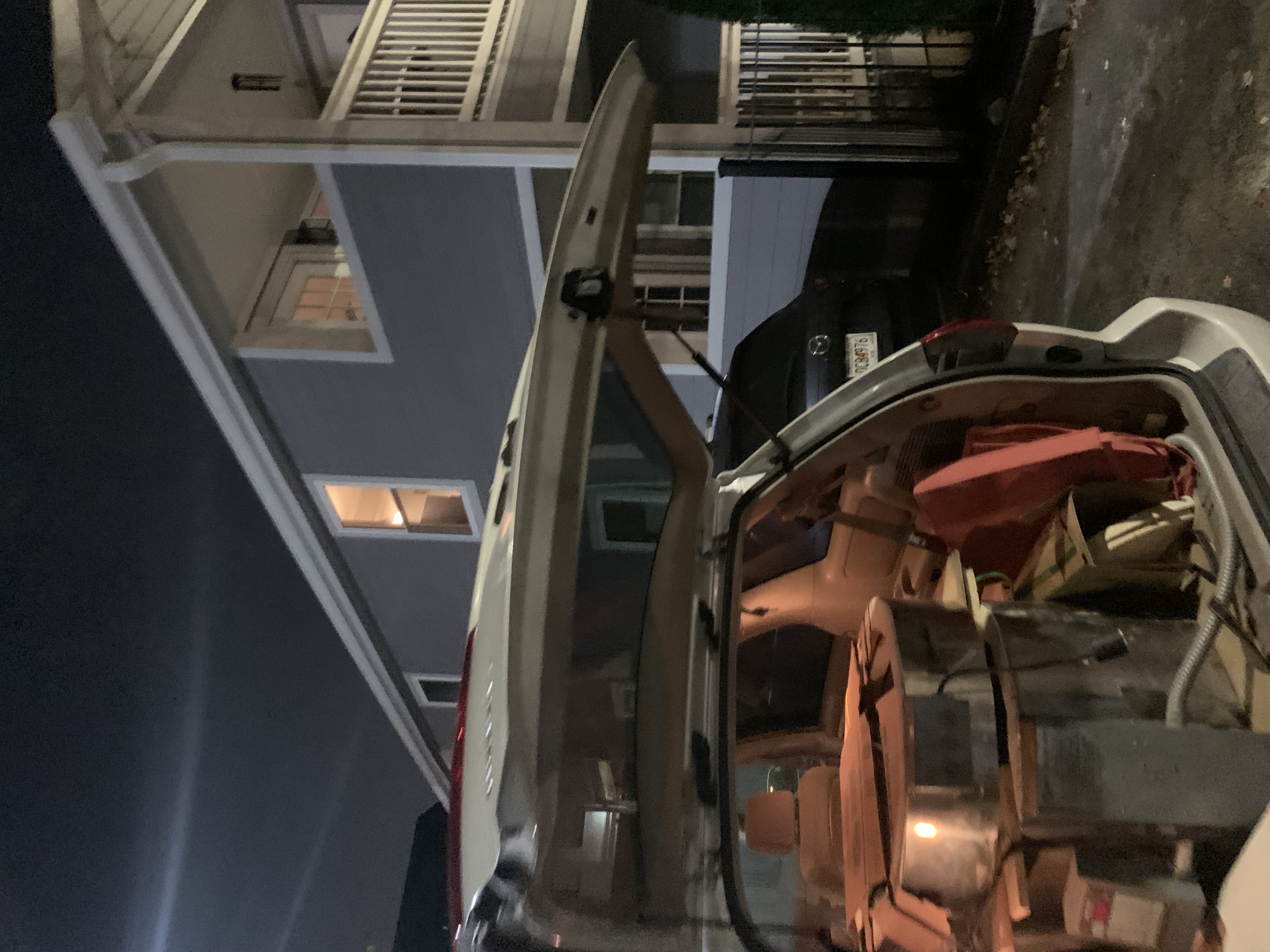
Control and routine were big thoughts this week. There’s been so much moving around and a good bit of angst around work as well (work as in the part time service job at a restaurant, not the pottery). I’ve been driving most days. Once to Tuscaloosa and Huntsville, once to Weaverville, North Carolina and most other days around the metro Atlanta area in search of different FB marketplace deals on shelves, tables, etc. It’s felt like a bit of a scattered week and that has certainly taken its toll on my ability to form coherent thoughts here for my intimidating audience. So here are the fragments just arranged chronologically from the week.
____
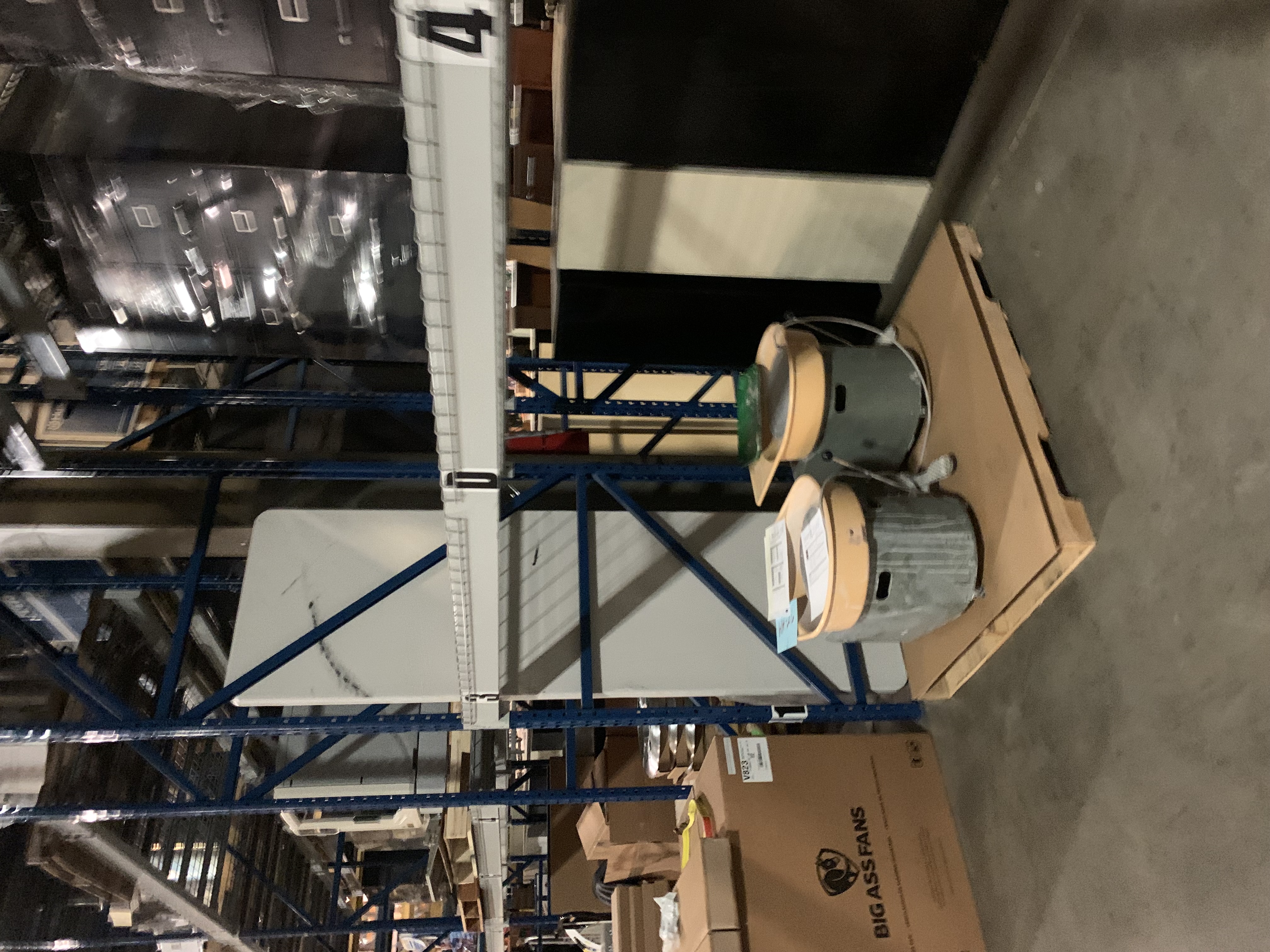
While last week’s blog makes mention of the anxious, slow, prideful processes involved in starting up Atlanta Studio Pottery, it doesn’t go into many details. Today I feel much closer to all those details. Yesterday I crisscrossed Alabama with my brother, picking up a car in Tuscaloosa, driving it to Florence and then driving back to Atlanta. Today I drove all around Atlanta looking to get the lighting cables repaired for the minivan trailer hitch so I can go get a kiln on Wednesday from North Carolina. There have been lots of little talks with different friends and mentors about design work for the pottery, Chinese teaware, collaborations, etc. I’ve also started what feel like the first moves in making the pottery somewhat public: this blog and a dedicated instagram account. As I think back on all of this, there’s a spectrum of feelings that all have to do with themes of control, privacy, and visibility. I’m going to see if I can think through some of that more clearly here.
One layer of what I’m thinking about is the actual space of the studio, its tantalizing, hypothetical presence (now waiting on insurance to be able to move in) and its inverse in the public/everywhere else world. A lot of artists think about this dynamic of studio vs. world. Some are deeply committed to the studio as a semi-sacred space of privacy and contemplation. And of course then there is an opposite side of people who say the studio is like a tomb or an isolating prison when seen as something separate from the world in general. This conceptual debate is at least somewhat separate from the practical needs of certain artists and craftspeople to have dedicated equipment which requires a physical space. Painters are a good example of that: really, the material needs are quite limited, but some worship the studio space while others shun the idea of one. The issue then comes down to the value of an “isolated” space as a stage through which material needs to move to turn from ideas, paint, clay, garbage, nothing, etc. into “art.” Or, to focus more on the artist, a private space in which their influence is ostensibly the major factor. I don’t mean extreme factory precision level control necessarily, but possibly that. In the studio, you can control the amount of control you have, you can let in as much or as little chaos as you want. That ability to control the conditions in which you work strikes me right now as the major conceptual feature of the studio. And I crave this control deeply.
____
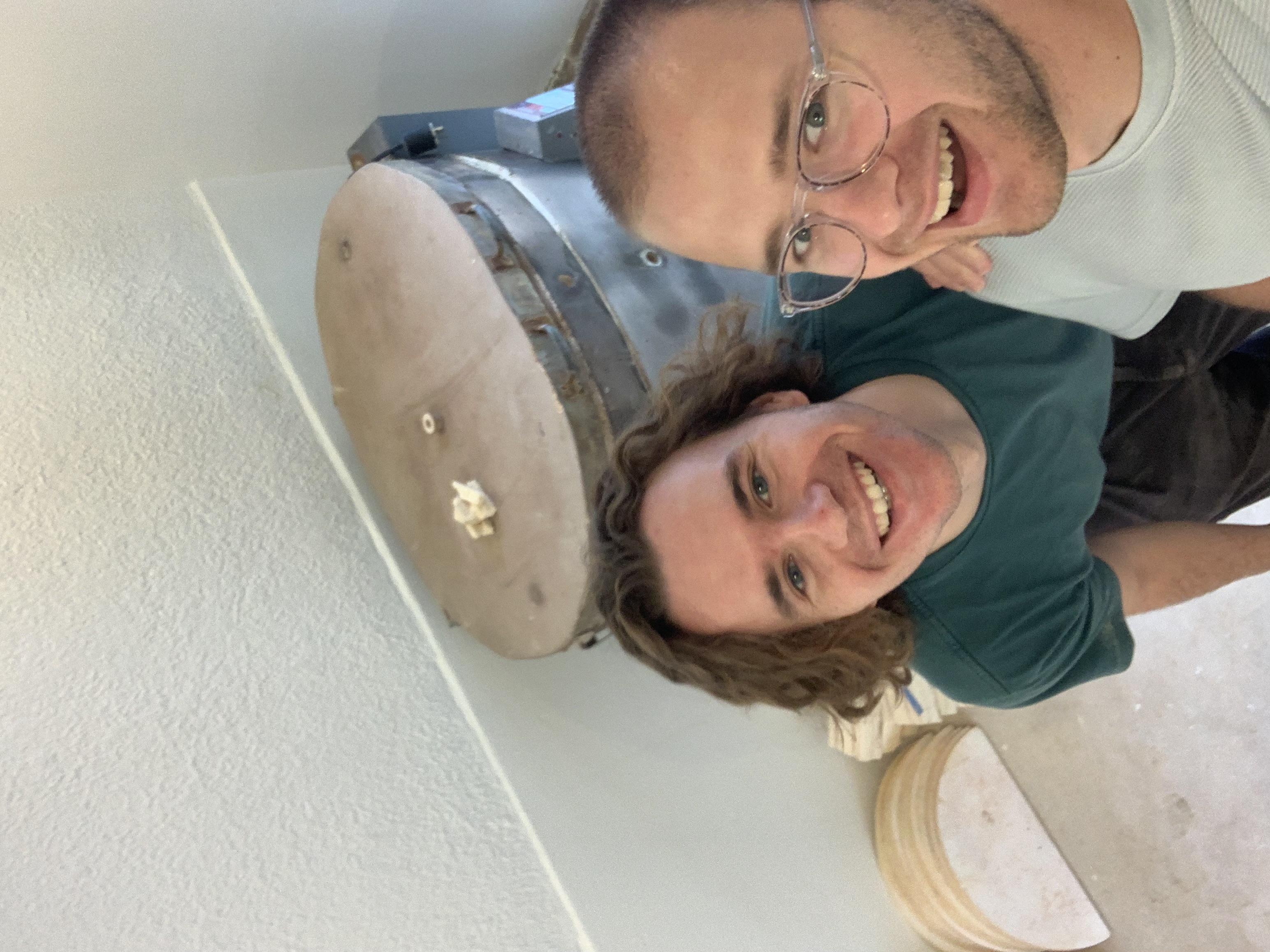
The theoretical musing was put aside for a couple of days. I drove up to North Carolina, to Weaverville, on Wednesday and collected a kiln from Sue and Randy Hintz. They are at the tail end (though not quite done yet!) of a thirty year career in production pottery which is winding down in the difficult aftermath of hurricane Helene. It was interesting hearing about all the late stage musings of people at a different part of a similar path to the one I’m on. Many of those musings on control I’ve been having have had to do with the sense of a new and unknown set of parameters that define the contours of “starting a business,” and a pottery. So much of it feels like it comes down to individual decisions, made in isolation from many options and without anyone telling you what the “right” option is. But partly, the last week has been making me sense that there are certain determining factors that I’m just not used to being attuned to in quite the same way. Sue and Randy made their decisions on how to set up their studio based on a unique set of interests and abilities. Sue loves crystalline glazes and Randy worked as an engineer for many years and now does woodworking within the business with his wife. The rhythms of their work are defined by a different combination of curiosity and practicality than it would be if they did not work for themselves.
____
A friend recommended I read Derek Sivers Anything You Want recently, which charts his experience making and running the company CD Baby. One of the ways of thinking Sivers recommended is to construct your business as your own utopia: to build it as a microcosm that articulates how you think the world should work. I’ve been thinking with that a lot recently. It has a bit of the tone that I’ve found all over in my (very) short time reading books about starting businesses, easily self-assured from the retrospective position of success, and I don’t know that “utopia” exactly fits all businesses. The artist perspective in me is so used to thinking from a critical, participative, observational position. I’m used to looking for connections and ways in which I am implicated, doing the work of connection, rather than articulating something I can see as discreet and self-contained like a utopia. But art has different needs than a business. An artist may well have to think about how their work relates to and connects to the world. One way of reading art might be to say that artworks make individual arguments about how the world is/should be. It’s impossible to contain them, to make them not talk about the whole. But businesses participate in the whole from a less detached perspective. They are little discreet elements within the whole. Their purpose is participation, not commentary.
____
I’ve been buying a lot of things this week. I feel like I’m haemorrhaging money in an impossible way. And yet, these have all been entirely necessary and even responsible purchases for setting up the pottery. As the material things have collected (kiln, wheels, glaze materials, clay, etc.) and the space has begun to fill, it has started to take on a momentum of its own. It isn’t a path defined by a clear curriculum or career path, but it is something with inertia. This inertia is the cumbersome counterweight to Silvers’ somewhat light and breezy sounding “anything you want.” What I am making “whatever I want” out of has its own demands which seem to push up against any utopian aspirations I might have. But this might just be the wrong way of thinking about it. In order for the utopia to be something more than a no-place, it needs that weighty material stuff to fill it up.
Nov 10 - 16, 2025
I’m beginning this weekly blog to reflect on and keep track of the things going on in my life. I’ve kept a journal since high school, but I often come up against uncertainties as to why I’m writing in that context. Sometimes the writing feels purely cathartic in the moment and helps to give rhythm to the day. Often it helps me process and reflect on things that have been going on. I used to try to maintain a documentary approach and would be pretty meticulous about making sure to go through all the things that happened in the day. But recently it’s been a lot more abstract. I’ll focus in on something that happened and then burrow down into all the details of what I think about that thing.
One current of the shifting, changeability of my relationship to journal writing has always been the extent to which it is a private thing. I can never entirely shake the feeling that it isn’t an entirely private thing, that the act of writing it invites some idea of a reader. But sometimes that reader feels closer than others. Sometimes that other is a future version of myself, or some less articulate inner self that stays quiet but reads, sometimes it’s a friend, a partner, or a stranger.
Developing a writing practice that does some of the same things – reflects on things going on in a day to day way – but that is public, shifts the question somewhat. I may still have all those abstract readers in mind, they may still be addressed by the writing, but the deeply rooted fear (?), that nothing is really private, that any writing is going to find a reader that is not the person writing, that’s addressed, maybe put aside by letting the writing be totally accessible.
To jump right into it, the main thing that has been occupying me recently has been starting a pottery studio. This will be a one person production studio making porcelain work, at least at first. I moved to Atlanta a few months ago with my brother wanting to have some sort of art studio in which to process and move forward from my time as an MFA candidate at Goldsmiths. Within a couple weeks of getting here, I started being obsessed with the idea of opening a fully fledged production studio. The idea was very strong in me. It would keep me up at night and I couldn’t walk by an empty storefront without looking for a “for lease” sign and thinking about how it might work as a pottery.
This period lasted through until I actually started fully committing to the idea and working out what the details of realizing this plan would be. This past week I’ve been thinking about that transition a lot, wondering if I lack the enthusiasm needed to really sustain the project as a business largely because I miss that enthusiasm that started out the whole process. The feeling that has replaced the feverish enthusiasm is a mixture of frustration, anxiety, and pride. The frustration and anxiety come from the slowness of the process. A lot of the early enthusiasm was tempered by the slow, slow process of actually finding a place to lease and thinking through what it means to be responsible for a lease, for the cost of a kiln, wheel, and all the supplies that go into running a studio. The pride comes from actually tackling these issues, reaching out to people who have equipment, looking at different potential properties. It doesn’t feel like an unmanageable or unhealthy mix of emotions when doing something new and interesting which requires a different type of independence than anything I’ve done before. But it does feel very different from the initial emotions that drove me to start this project in the first place.
One thing that I often think about/notice in myself is how emotional responses often overlap each other. What started as a reaction to one thing might only become felt much later and have lost its relationship to the thing that started it. In this case, the emotional intensity I attached to wanting to start this pottery, retrospectively, feels at least partly to be the result of a more general sense of aimlessness, idleness, need to do something that had been growing in me for the last year or so without a sufficient outlet. Does tracing the emotional history of this desire to start a pottery diminish the intensity and the validity of that specific desire? Do I worry that the pottery itself will not be able to hold my attention because it is just a scape-goat for a generalised crisis of identity that comes with ending school and no-longer having the clearcut sense of direction that education offers? I guess the answer is, at least somewhat, yes.
I don’t necessarily want to try to make a happy flip side sort of thing for this. Like, “but if the emotions associated with doing something lag somewhat behind, then now you are feeling a truer version of what it is like to tackle this project. And it certainly isn’t bad, it’s stretching into new tasks and ways of relating to the world… etc.” Yes, that’s there, of course, I don’t feel that this is a wrong decision, I am excited about it and deeply committed to it. But that negativity, the scape-goat for a generalized crisis thing, is an important thing to build into how this pottery develops.
Narrowing down has always been a really hard thing for me. I find it difficult to see a project through to completion, often for the really disheartening reason that I stop believing in it after a certain point. It’s not that it is too hard, but that certain very convincing inner voices start pointing out the general uselessness of whatever I’m trying to accomplish. And, maybe more importantly, certain other inner voices start shouting very excitedly about this other, different, more valuable and interesting thing which is far more worthwhile than whatever hollow shell of an idea I’m currently working on. When I realise I’ve been had, the Elliot line “distracted by distraction from distraction” gloats around my mind for a while.
One way that I hope this project will avoid being cast aside is that it simply can’t be. It is too big, I’m too responsible for it. It isn’t on a few sheets of paper or a hard drive, it’s a lease agreement with long term obligations and several thousand dollars worth of equipment. It exists in a different sort of ecosystem than projects done as a student. The scaffolding that any institution provides isn’t there. The scaffolding is whatever I make of it. And so, another form of scape-goating, that of blaming the institution for whatever tragically never comes to fruition is not available.
I guess what I’m trying to say is that as with probably almost every business ever started, there is an immensity of barely articulable hopes and dreams behind this one which are being fit into a ceramics shaped box. All hopes and dreams, if they are to materialize as anything other than words, must be fit into a box of some kind. They must go from being limitless to concrete, solid, singular. And maybe there is something about personal identity within that as well. Educational spaces are a place of formation, of becoming something solid and specific, but, at least in my case, that process feels significantly incomplete, as I have maintained a critical and speculative distance from the “art world,” the “craft world” or any form of professionalized space in which I might feel that I could take on an articulate, legible presence.
The specific ceramics shaped box that I am putting this mess of self-realization into is entirely my own. I am getting to create its shape and possibilities. But alongside the practicalities of the outside world which structure the challenges, joys, etc. of working in this form, I want to stay aware of this inner anxious energy that is very much present at the start of this project. Not to dwell on the negative or to undermine the validity of the pottery, I want to stay aware of the ways that this ceramics shaped box is less container than it is a siv. Yes, the work is valuable for its own sake. If I didn’t think that, I would be doing something else. But that shouldn’t be the end of the story. The work is valuable as an expression and exploration of self, as a way of developing a way of living and interacting with others, as a way of taking on a set of responsibilities which force me to create real, material things and avoid the endless distraction.
So this pottery will start as something very practical. It will be based around a functional range of pots thrown to consistent standards. I will run it based on the models I’ve had the luck to experience training in London and Jingdezhen. But it will not be a rigid thing. It will be aware of its origins as part of a more abstract need to shape personal and creative energies. It will give shape to those energies and also be constantly reshaped by them. While my training has inclined me to more “quiet” sedate pots, the pottery itself will be as experimental, noisy, and flexible as it needs to be to continually explore and give voice to that constant, gnawing, distractable search.